OTalk

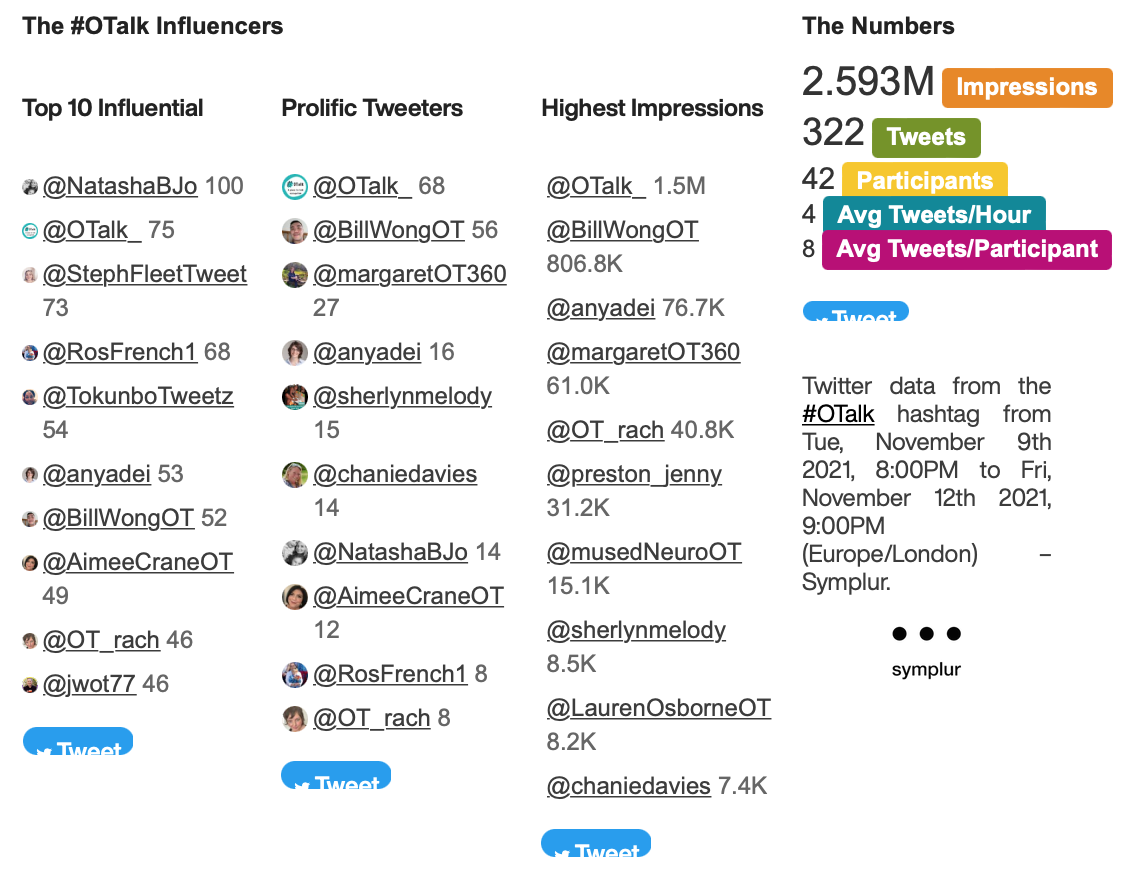
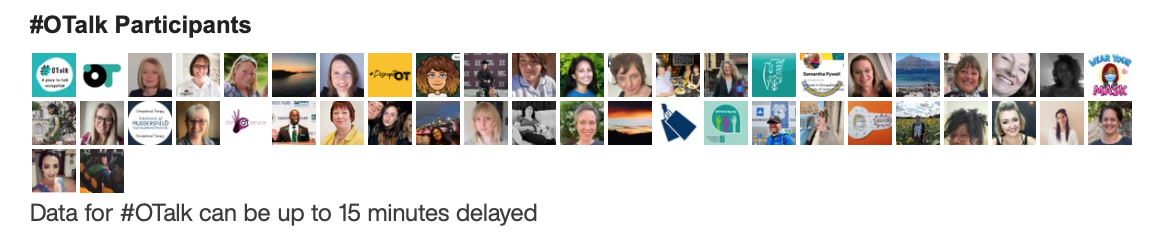
#OTalk – 9th Nov 2021 – Are you being the OT you dreamed youโ€™d be?ย 

This weeks chat will be hosted by Natasha Bruce-Jones, @NatashaBJo Clinical Director, Think Therapy 1st

As the anniversary of my second decade as a qualified OT draws to a close Iโ€™m lead to reflect on my โ€˜whyโ€™. Why did I choose OT? What did I envisage my job to look and feel like every day? I can easily recall: the diversity of approaches and the ability to โ€˜do with’ rather than โ€˜do forโ€™. Whilst enjoying delivering therapy with arts, crafts and leisure I was often amazed that this was actually classed as work at all! But having used my scholarly dissertation to confirm that even two decades ago there was a low uptake in these activities as a therapy method, Iโ€™m pulled again to reflect on how things have changed in OT practises today under the ever-growing pressures of statutory authorities, and restrictions of red tape and budget tightening. 

I’ve worked in emergency, acute, community, education, and most recently in private practise. I have felt pressured to meet targets more than meet people’s expectations; to meet deadlines more than meet peopleโ€™s real goals; to save money more than provide โ€˜quality of lifeโ€™ focused treatment. I have watched OT emerge to address the needs of the setting rather than the needs of the client, have felt pressure to become a Consultant OT and mould myself into the medical model to be recognised, and ultimately decided to leave roles for fear of not being allowed to actually practise OT in my OT role. I was fortunate enough to find the freedom of private practise as my saviour, but friends and colleagues have felt so dismayed at the limits in their roles that they have tragically left the profession altogether! 

When I joined private practice, my fire was reignited. I was reminded how amazing, inspiring, creative and interactive OT can be, and how boundaried, restricted and distracted from my โ€˜change the worldโ€™ student vision statutory roles had forced me to become. Now my therapy days consist of kite flying, metal detecting, velodrome cycling, mountaineering, open water swimming, boxing, knitting, refurbishing house boats, learning Spanish โ€“ the list goes on, and I love it. The biggest win however will always be hearing the unreserved thanks and surprise from clients at the magnitude of effect true OT can have on their entire lives. 

This poses me to ask the rest of the OT community about your experiences and draw you to think about what your role potential could be. 

  • What is it about your OT role that prevents you realising your full OT potential? 
  • How can OTs truly provide client led services if working within the โ€˜top downโ€™ management systems of local authorities and NHS?  
  • How can OTs refuse to allow role or service changes that reduce their scope and impact? 
  • Is OTs use of terms like โ€˜prescibingโ€™ and โ€˜consultantโ€™  a sign of OTs feeling a need for medical recognition and contributing to an already blurry public understanding ? 
  • What is the most fun youโ€™ve had delivering your OT in the last year? 

POST CHAT

Host:  This weeks chat will be hosted by Natasha Bruce-Jones, @NatashaBJo Clinical Director, Think Therapy 1st

Support on OTalk Account: @colourfulot

Evidence your CPD. If you joined in this chat you can download the below transcript as evidence for your CPD, but remember the HCPC are interested in what you have learnt.  So why not complete one of our reflection logs to evidence your learning?

HCPC Standards for CPD.

  • Maintain a continuous, up-to-date and accurate record of their CPD activities.
  • Demonstrate that their CPD activities are a mixture of learning activities relevant to current or future practice.
  • Seek to ensure that their CPD has contributed to the quality of their practice and service delivery.
  • Seek to ensure that their CPD benefits the service user.
  • Upon request, present a written profile (which must be their own work and supported by evidence) explaining how they have met the Standards for CPD.

OTalk

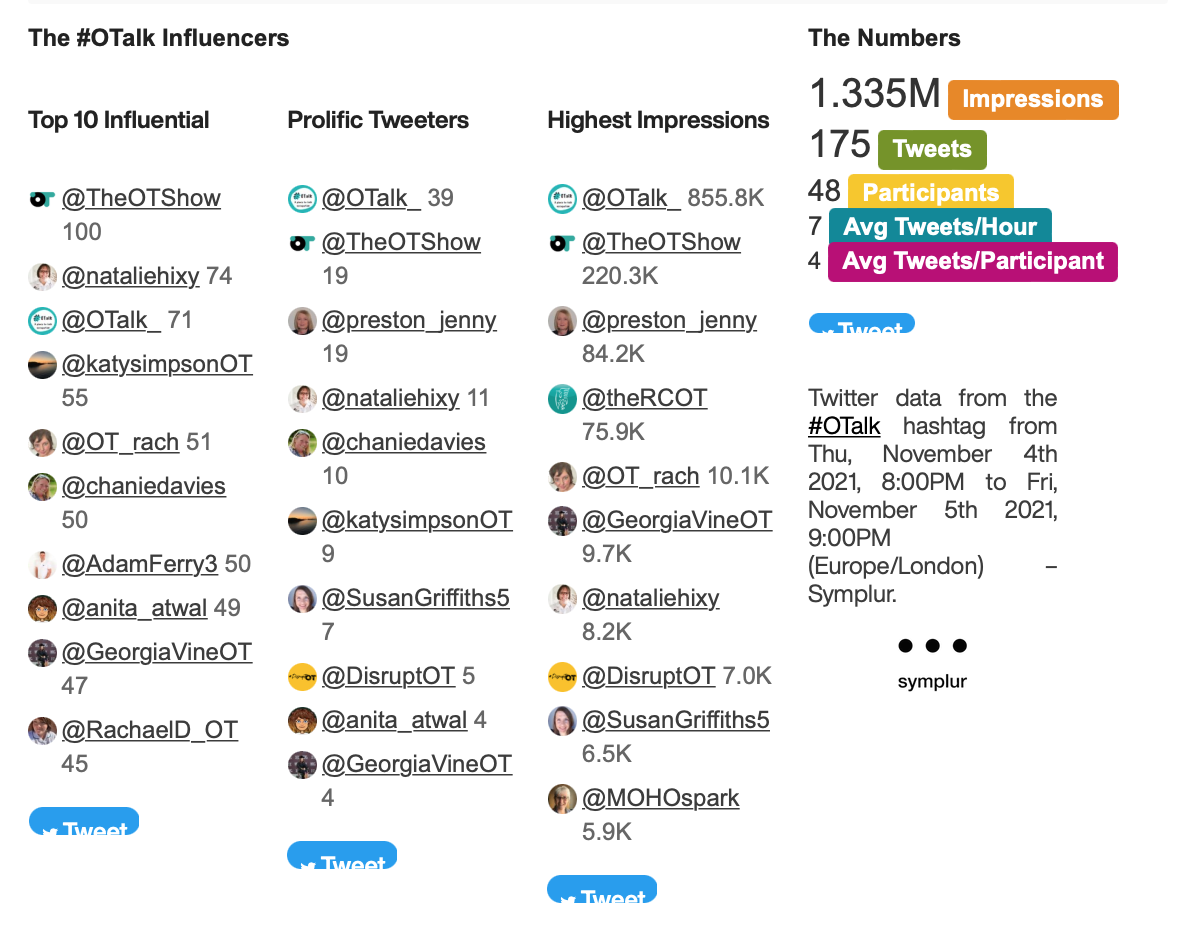
#OTalk OT Week Special Event #OTsForEquity โ€“ THURSDAY 4th November 8pm – Health equality and sustainable development goals. Hosted by @theOTShow

As part of #OTalk’s 10th Birthday celebrations we are hosting special #OTalk’s during #OTWeek on this yearโ€™s theme #OTsForEquity. Thursday 4th November OT Show’s/ The OT Service, @adamferry3 will be leading the chat.

The Sustainable Development Goals (SDGS) or Global Goals are a collection of 17 interlinked global goals designed to be a “blueprint to achieve a better and more sustainable future for all”. The SDGs were set up in 2015 by the United Nations General Assembly and are intended to be achieved by the year 2030 (United Nations, 2020)

The sustainable development goals cover 17 aspects of global targets, from poverty, through to good health and wellbeing, and climate action.  As part of health equality, given the many facets of health, it is important to consider our roles, both personally and professionally in supporting the outcomes.

This session will consider specific targets within the SDGS and reflect on how occupational therapy is, or can, influence success. 

Specifically, targets covered within this #OTalk will be:

  • good health and wellbeing –  target 3.8:

โ€˜Achieve universal health coverage, including financial risk protection and access to quality essential health-care servicesโ€™

  • End poverty in all its forms, everywhere โ€“ target 1.4:

โ€˜Ensure that all men and women, in particular the poor and the vulnerable, have equal rights to economic resources, as well as access to basic servicesโ€™

  • Strengthen the means of implementation and revitalize the global partnership for sustainable development โ€“ target 17.17:

โ€˜Encourage and promote effective public, public-private and civil society partnerships, building on the experience and resourcing strategies of partnershipsโ€™

We will consider the potential challenges within current health and social care systems in meeting these targets and reflect on opportunities within the profession to maximise long-term health and well-being for all.


POST CHAT

Host:  @theOTShow @adamferry3

Support on OTalk Account: @otrach

Evidence your CPD. If you joined in this chat you can download the below transcript as evidence for your CPD, but remember the HCPC are interested in what you have learnt.  So why not complete one of our reflection logs to evidence your learning?

HCPC Standards for CPD.

  • Maintain a continuous, up-to-date and accurate record of their CPD activities.
  • Demonstrate that their CPD activities are a mixture of learning activities relevant to current or future practice.
  • Seek to ensure that their CPD has contributed to the quality of their practice and service delivery.
  • Seek to ensure that their CPD benefits the service user.
  • Upon request, present a written profile (which must be their own work and supported by evidence) explaining how they have met the Standards for CPD.
CPD, Equality, Exploring the Role of Occupational Therapy, OTalk

#OTalk OT Week Special Twitter Chat #OTsForEquity WEDNESDAY 3rd November 2021 8pm – Hosted by @theRCOT

As part of #OTalk’s 10th Birthday celebrations we are supporting the Royal College of Occupational Therapists during #OTWeek. The theme of this yearโ€™s OT Week is #OTsForEquity.

Tonightโ€™s Twitter chat is hosted by Karin Orman, RCOT Assistant Director โ€“ Professional Practice and Genevieve Smyth, Professional Advisor RCOT. The chat will shine a light on the role occupational therapists can and do play in achieving health equity and is just one of many activities taking place across OT Week to address this important topic. 

Health equity is one of RCOTโ€™s priorities for the coming year and if we are to meet the needs of those we support, we need to build on existing innovation and best practice. 

 #OTalk in Occupational Therapy Week offers the opportunity to collectively put our thinking hats on to explore what we mean by health equity and share ideas for further actions. This conversation and our ideas platform will inform RCOTโ€™s action plan to achieve health equity. 

As occupational therapists you already do a lot towards creating health equity, but is there more you could do? Is there best practice that you’d like to share with others? Do you have an idea that would overcome some of blocks that you and others face within your team or organisation to achieving health equity amongst your service users?  

There is strength in numbers! Do you have an idea that would use the power of our community and have an impact on health equity? If you do, please share it with us. 

Weโ€™re ready to take action to strive for health equity across the UK. This is the start of our campaign, weโ€™re already putting pressure on government, healthcare leaders and commissioners to act.  But we want to hear your ideas on what we could be doing that will make the greatest impact. We know we canโ€™t do this alone. Weโ€™re calling on the government to provide a long-term strategy. Weโ€™d like to hear from you what we specifically we should be asking for? What resources do you need? What areas need funding so that you can improve and expand health care provision across all areas of society. 

This is what we would like you to consider and discuss.

Questions

  1. What does health equity mean to you and those who use your services?
  1. What as occupational therapists can we do as individuals, within our teams and organisations to create health equity?
  1. What as a profession can we do collectively to create health equity?
  1. How would you like to RCOT lead on the healthy equity agenda? What would you like to see RCOT do as a professional body to support members create health equity and to influence external agendas?
  1. What should we be asking governments to do to create health equity? What should governments do that that will help us as occupational therapists to do more to create health equity? 

Join #OTalk and #OTsForEquity on Wednesday night at 8.00pm (UK) to share your views and ideas.

POST CHAT

Host:ย ย  Karin Orman, RCOT Assistant Director โ€“ Professional Practice @RCOT__Karin Genevieve Smyth, Professional Advisor RCOT @RCOT_Gen @theRCOT

Support on OTalk Account:ย  @preston_jenny

Evidence your CPD. If you joined in this chat you can download the below transcript as evidence for your CPD, but remember the HCPC are interested in what you have learnt.  So why not complete one of our reflection logs to evidence your learning?

HCPC Standards for CPD.

  • Maintain a continuous, up-to-date and accurate record of their CPD activities.
  • Demonstrate that their CPD activities are a mixture of learning activities relevant to current or future practice.
  • Seek to ensure that their CPD has contributed to the quality of their practice and service delivery.
  • Seek to ensure that their CPD benefits the service user.
  • Upon request, present a written profile (which must be their own work and supported by evidence) explaining how they have met the Standards for CPD.
OTalk

#OTalk Research 2nd November 2021

This week our host is Sherri Kapadia  @ot_withsherri_

As part of our OT Week activities, Sherri will host this weekโ€™s chat on

The role of research in supporting occupational therapists to achieve health equity

Eliminating health inequalities are a priority in effective occupational therapy practice. In their simplest form, health inequalities consider the variations in people’s health status, which encompasses life expectancy and disease prevalence (Kings Fund, 2020). The evidence reflects that drivers of such differences in people’s health stem from social factors including education, income, gender and ethnicity (World Health Organisation, 2018). Equally, it is important to acknowledge who health inequalities occur between. Four main factors in which health inequalities are typically analysed are: socioeconomic factors, geographical location, characteristic (including ones protected by the law such as race and disability) and socially excluded groups (Kings Fund, 2020). 

For occupational therapists, tackling health inequalities has no defined pathway. However, we can begin by putting occupation at the centre of the solution. Occupational therapists may consider the impact that driving factors of health inequalities have on individuals’ engagement in occupation.  For example, health management is an occupation outlined in the Occupational Therapy Practice Framework (OTPF; AOTA, 2020), and within this is communicating with healthcare systems. Occupational therapists may seek to understand the systemic and social barriers to accessing healthcare that different groups may face. Occupational therapists can identify strategies that lessen these barriers and enable these groups to participate in health management activities. 

Alternatively, occupational therapists may consider the impact on participation that unequal health outcomes have on individuals’ engagement in occupation. Here, occupational therapist’s may seek to understand how a disease may influence a person’s participation in a particular occupation. For example, when interventions provided are not centred towards an individual’s needs, they may engage in occupations that temporarily reduce their symptoms but negatively impact their health in the long term. At this stage, occupational therapists may be well placed to help individuals manage their symptoms and find substitute occupations that can positively impact their health and lifestyle. 

Research is a crucial factor in highlighting the role of occupational therapy in tackling health inequalities and ensuring occupational therapy interventions are adaptable and, therefore, equally effective on different individuals. It is well known that occupational therapists work with a diverse range of clients. However, it is not well known if our evidence base reflects the same diversity. Therefore, it is crucial to acknowledge the role of research in helping occupational therapists to bridge the gaps in health inequalities. 

Furthermore, it is essential to acknowledge that the type of research needed to improve our understanding of health inequalities spans qualitative and quantitative methods. For example, the Richmond Group report, ‘You only had to ask: what people with multiple conditions say about health equity’, stated that statistical analysis between long-term conditions and socioeconomic status was evident. However, less research focused on exploring the lived experience of individuals facing these health inequalities (Richmond Group of Charities; Impact on Urban Health, 2021). This example reflects the need to analyse the impact of health inequalities from both an objective and subjective perspective. 

Additionally, the systemic drivers of health inequalities require those with lived experience to be at the forefront of research efforts. Facilitating co-produced or community-led research may ensure that occupational therapy interventions produce equitable outcomes and are meaningful to different individuals and groups. Further research is required to trial new and old interventions with various groups, understand the occupational needs that are not being acknowledged, and thoroughly examine our role in preventative measures. 

Through meaningful research, occupational therapists can enact significant change and be a part of providing equitable care for everyone. The questions below will hopefully provoke the conversation about conducting research in occupational therapy to support health equity for all. 

Questions

  1. What role do you think research plays in supporting health equity? Do you have examples to share?
  1. What evidence do we need to build upon to create greater health equity? What new evidence should the OT profession generate which highlights and provides solutions to overcoming health inequalities? 
  1. What methodological considerations do we need to address when designing and carrying out research which highlights and provides solutions to achieving health equity?
  1. Ethical research is essential. What ethical considerations might we need to consider when planning to research groups facing health inequalities?
  1. Health equity is an important issue. What are effective ways of disseminating new research in this area to ensure practicing OTs are aware of its findings and able to translate these findings into their practice? 

References

American Occupational Therapy Association. (2020). Occupational therapy practice framework: Domain and process (4th ed.). American Journal of Occupational Therapy74(Suppl. 2), Article 7412410010. https://doi.org/10.5014/ajot.2020.74S2001 


Kings Fund, Williams, E., Buck, D. and Babalola, G. (2020) What are health inequalities? Available at: https://www.kingsfund.org.uk/publications/what-are-health-inequalities (Accessed: 26/10/2021)

The Richmond Group of Charities and Impact on Urban Health (2021) You only had to ask
What people with multiple conditions say about health equity A report from the Taskforce on Multiple Conditions. Available at: https://richmondgroupofcharities.org.uk/sites/default/files/youonlyhadtoask_fullreport_july2021_final.pdf?utm_source=The%20King%27s%20Fund%20newsletters%20%28main%20account%29&utm_medium=email&utm_campaign=12554246_NEWSL_HWB%202021-08-09&dm_i=21A8,7H2X2,6W4S2E,UDUYQ,1 (Accessed: 26/10/2021)

World Health Organisation (2018) ‘Health inequalities and their causes’ย 

Post Chat

Host:ย ย This week our host is Sherri Kapadiaย @ot_withsherri_

Support on OTalk Account:ย @preston_jennyย 

Evidence your CPD. If you joined in this chat you can download the below transcript as evidence for your CPD, but remember the HCPC are interested in what you have learnt.  So why not complete one of our reflection logs to evidence your learning?

HCPC Standards for CPD.

  • Maintain a continuous, up-to-date and accurate record of their CPD activities.
  • Demonstrate that their CPD activities are a mixture of learning activities relevant to current or future practice.
  • Seek to ensure that their CPD has contributed to the quality of their practice and service delivery.
  • Seek to ensure that their CPD benefits the service user.
  • Upon request, present a written profile (which must be their own work and supported by evidence) explaining how they have met the Standards for CPD.
OTalk

#OTalkTurnsTen – Our Birthday Celebration #OTalk Tuesday 26th Oct Plus our Occupational Therapy Week #OTalksBirthdayGift to you. #OTsForEquityย 

Throughout October #OTalk has been asking the community to help us celebrate #OTalkTurnsTen in three different ways, 

  1. Share why you love #OTalk #OTalkTurnsTen
  2. Bake #OTalk a Birthday cake and share it #OTalkDoesBakeOff 
  3. Apply to become a member of either the #OTalk team or the #OTalk Research team #BecomeAnOTalkTeamMember

We are so pleased with your efforts even though some of you forgot to include the hashtags, that naughty step is getting crowded. 

Please do join us on Tuesday 26th Oct at the usual #OTalk time of 8pm for a relaxed chat to celebrate our birthday. With time, ask us questions and reflect on the last ten years, bring your own cake!

To say thank you and to continue with the ten year celebration of weekly free CPD.  

We have three gifts for you. 

Our New Look, we have been working hard in the background to update the website and are so pleased to launch our new logos.

Video of your #OTalkTurnsTen love, check out all the videos posted on our youtube page including one that shows how the community responds. https://www.youtube.com/channel/UC8ydvpjXaKS56OD8uRdtiRA

Occupational Therapy Week Collaboration – This year the Royal College of Occupational Therapy (RCOT) has chosen the hot topic of #OTsForEquity as the theme for OT Week (1st – 7th November). To mark the event, we will be running extra #Otalks during OT Week and supporting events organised by RCOT and The OT Show. 

  • Monday 1st November RCOT are hosting a launch event 6-7.30pm online 

โ€˜Watch Professor Sir Michael Marmot, Director of the Institute of Health Equity, deliver his opening plenary Social justice and health equity, originally broadcast at Annual Conference 2021. Then join in the live Q&A session with a panel of occupational therapists and allied health professionals, including representatives from Public Health England and the BAMEOT UK, AbleOT UK, LGBTQIA+OT UK networks, as well as RCOT. You will be able to ask your questions using the online question box.โ€™ Our @OT_rach will be one of the panel members  

You can find out all the details and sign up to this free event on the RCOT website 

  • Tuesday 2nd of November 8-9pm #OTalk Research tweet chat hosted by @ot_withsherri_This month our research chat will explore research and the evidence base in relation to health inequalities 

Never joined in a twitter chat before?  Here is what you need to know. 

  • Wednesday 3 November 8-9pm The RCOT will be hosting an extra #OTalk special hosted by Karin Orman, RCOT Assistant Director โ€“ Professional Practice. The chat will help us to shine a light on the role occupational therapists can and do play in addressing health equity.

Never joined in a twitter chat before?  Here is what you need to know. 

  • Thursday 4th Of November 8-9pm The OT Show will be hosting a further OTalk special โ€˜Health equality and sustainable development goalsโ€™ hosted by Adam Ferry  @adamferry3 of The OT Service 

Donโ€™t forget to sign up to attend the OT show here 

  • Friday 5 November, 12noon-1pm – a new way to use twitter. RCOT are hosting a โ€˜Twitter Spacesโ€™, a new way to have live audio conversations on Twitter – it’s like a radio call-in panel show, but on Twitter! – Join Chief Executive Steve Ford in Twitter Spaces to discuss #OTsForEquity. More information from RCOT here  What are Twitter Spaces find out more here

POST CHATย 

Host:ย ย @OTalk_

Support on OTalk Account:ย @OT_rach

Evidence your CPD. If you joined in this chat you can download the below transcript as evidence for your CPD, but remember the HCPC are interested in what you have learnt.  So why not complete one of our reflection logs to evidence your learning?

HCPC Standards for CPD.

  • Maintain a continuous, up-to-date and accurate record of their CPD activities.
  • Demonstrate that their CPD activities are a mixture of learning activities relevant to current or future practice.
  • Seek to ensure that their CPD has contributed to the quality of their practice and service delivery.
  • Seek to ensure that their CPD benefits the service user.
  • Upon request, present a written profile (which must be their own work and supported by evidence) explaining how they have met the Standards for CPD.

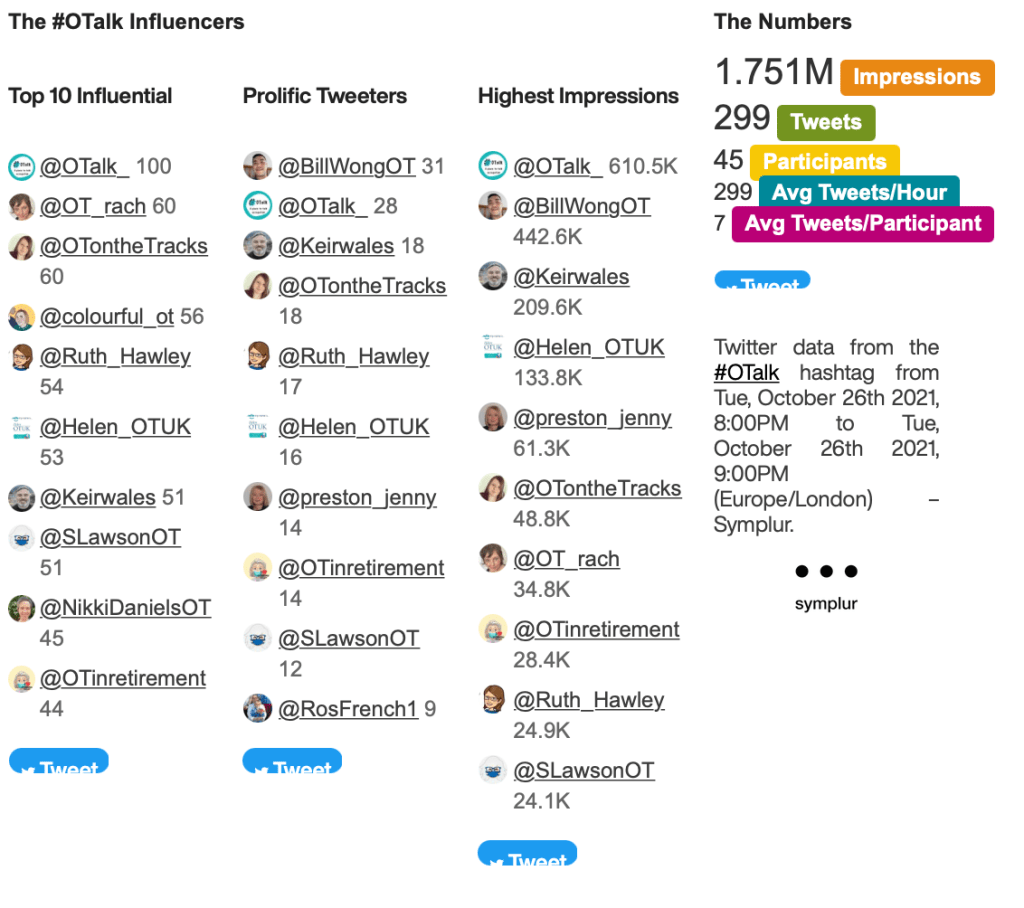
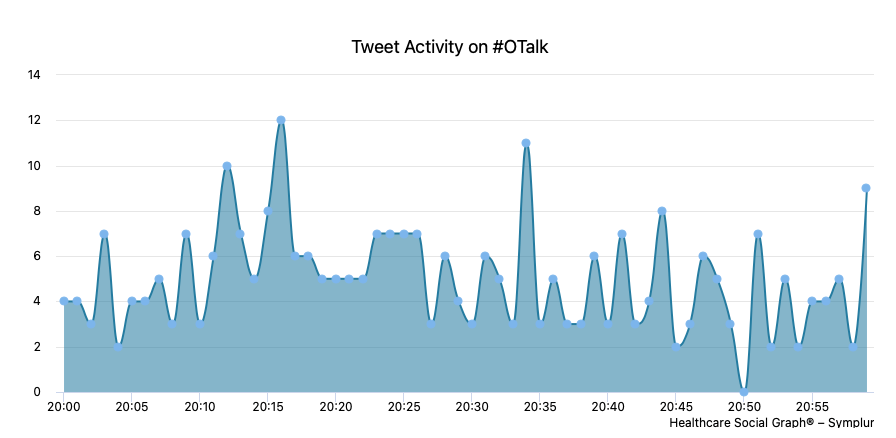
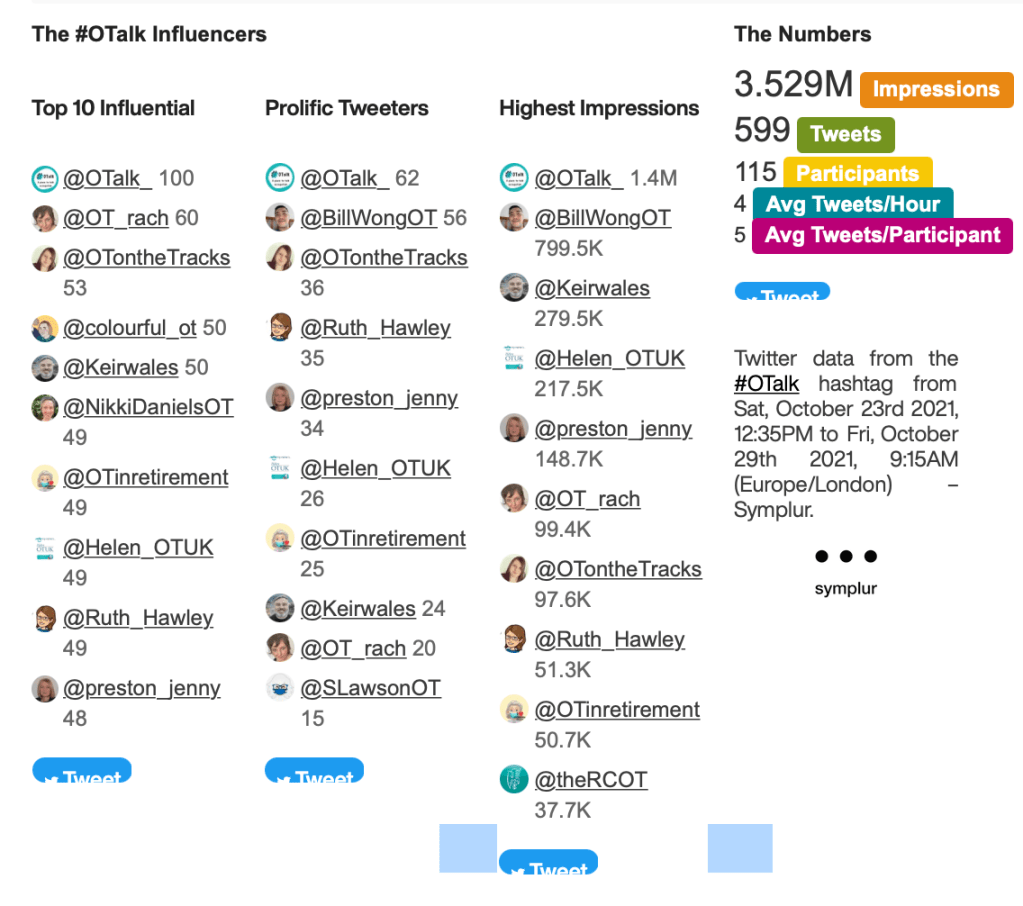
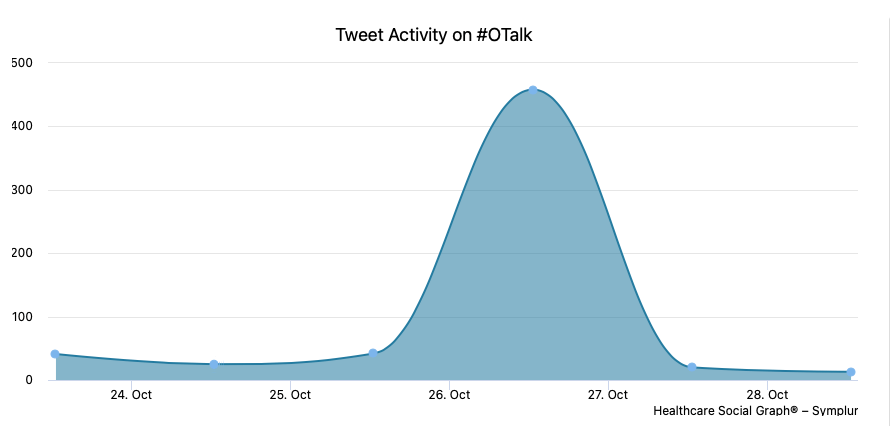
As this was a special occasion there are two lots of stats and transcripts this week.

Transcript/stats – One hour of the Birthday Chat.

Transcript/stats – Birthday Week. – Saturday 23th – Friday 29th Oct 2021