OTalk

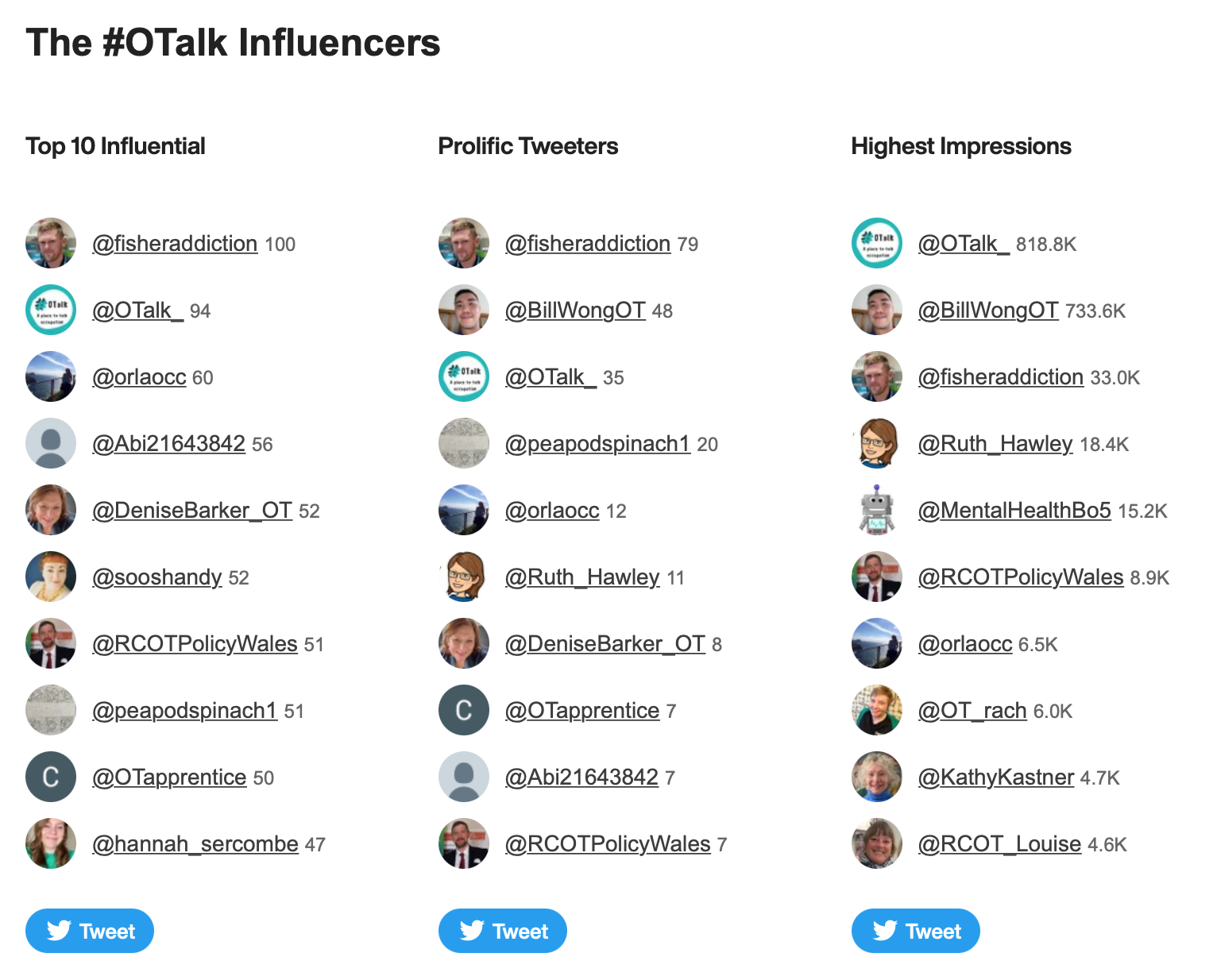
#OTalk Tuesday 16th August 2022 – The role of occupational therapy in substance misuse. Hosted by @fisheraddiction

This week #OTalk is hosted by Jon Fisher @fisheraddiction, here is what he has to say. If your new to OTalk find out here how to join in live on twitter every Tuesday 8pm Supported by Carolina.

The inclusion of occupational therapy intervention for people with addiction first appeared in the 1950’s in the ‘Clinical trial of occupational therapy in the treatment of alcohol addiction’ (Hossack, 1952). More recently, the concept of ‘addiction as occupation’ has been explored more thoroughly by Wasmuth, Crabtree & Scott (2014). They argued that by framing addiction through an occupational perspective, it can highlight barriers to recovery and treatment retention. This in turn could form the basis of occupation-focused intervention as a novel perspective in contemporary treatment services. 

‘By acknowledging addiction as an occupation and then focusing on this occupation’s gains and harms, occupational therapists may be in a position to gain trust of clients and help them to make adjustments to their occupational lives that are personally beneficial.’ (Wasmuth, Crabtree & Scott, 2014). 

The professional assumption is that engagement in meaningful occupation promotes health and wellbeing (Yerxa, 1998). However, Twinley (2021) has argued the need to ‘illuminate the dark side of occupation’, challenging this assumption that all engagement is healthy. Twinley argues that by fully exploring the individual meaning behind occupations that can also be detrimental to health, we can gain new insights and move closer to truly holistic care. 

In a scoping review, the most commonly described interventions included those that promote leisure; included skills training to facilitate activities of daily living; vocation based and those aimed at re-establishing community based sober routines (Ryan & Boland, 2021). It is by fostering a sense of competence through occupational participant that Patel, Scott and Bradshaw (2021) argue is the distinct value occupational therapy brings to promoting lasting recovery and reducing harm. 

With the UK’s ageing population (ONS, 2020) and an increasingly complex service landscape, evidence has shown it is the ageing ‘baby boomer’ generation who are at increasing risk from alcohol use. By drinking at the same level in their 40’s and beyond, this increases the risk of the harms associated with alcohol (Drink Wise, Age Well, 2021). Alcohol Related Brain Damage (ARBD) is increasingly recognised in services, with those in their 40’s and 50’s as the higher risk group (Royal College of Psychiatry, 2014). Changes in functional abilities arising from altered cognition fall well within the domain of occupational therapy with compensatory or rehabilitative interventions that promote occupational performance. 

Careful consideration is encouraged when addressing substance use in older adults (Royal College of Psychiatrists, 2018) in what ‘Our Invisible Addicts’ report describes as a ‘constellation of risks’. It argues for similar interpretation of risks and benefits of and individuals substance use on their physical and mental wellbeing; something that the concept of ‘addiction as occupation’ can support. 

There is a shortage of research concerning neurodiversity and substance use. Addictions UK (2020) found in their literature review that the studies available tended to focus on adult males who have had contact with the criminal justice system.  The National Autistic Society (2022) describes how someone with autism may use or become reliant on substances due to the stress arising from masking in order to ‘fit in’. They make a series of recommendations to ensure services are accessible. It is clear further understanding and changes are needed across the board.

In order to promote practice in this area and foster joint understanding, The Occupational Therapy and Substance Misuse Network has formed covering the UK and Ireland. The network has linked with over 30 occupational therapists working in substance use and related services. These include a diverse range of settings including specialist community services, inpatient detox and residential rehabilitation, homelessness, adult social care, community and liaison mental health services encompassing NHS, local authority and private sector services. 

QUESTIONS FOR OTALK:

  1. What brings you to OTalk about occupational therapy in substance use?
  2. What value does the occupational therapy role bring to substance use settings? 
  3. Outside of specialist substance use services, where do occupational therapists come into contact with service users experiencing substance and addiction related harms?
  4. What role can occupational therapists play in tackling stigma associated with substance use and addiction?
  5. How can occupational therapy ensure that substance use services/treatment is accessible to everyone?

REFERENCES:

Addictions UK (2020) Towards better and more joined up policy & practice for people with addictions & neurodiversity conditions Our journey so far… Available from: Towards better and more joined up policy & practice for people with addictions & neurodiversity conditions (addictionsnortheast.com)

Amorelli, C.R. (2016). Psychosocial Occupational Therapy Interventions for Substance-Use Disorders: A Narrative Review. Occupational Therapy in Mental Health, 32(2), pp.167–184

Drink Wise, Age Well (2021) 2015 – 2021: Evaluation of the Drink Wise, Age Well programme. Availabel online: evaluation-report-2015-2020.pdf (drinkwiseagewell.org.uk)

Hossack, J. R (1952) Clinical trial of occupational therapy in the treatment of alcohol addiction. American Journal of Occupational Therapy. 6(6): 265-6. 

National Autistic Society (2021) Addiction. Available online: Addiction (autism.org.uk)

Patel, R., Scott, S.L. and Bradshaw, M. (2021). Individuals With Substance-Related Disorders: Lived Experiences and Perceptions of Daily Life. The American Journal of Occupational Therapy, 75(Supplement_2), p.7512510233p1-7512510233p1. 

Rojo-Mota, G., Pedrero-Pérez, E.J. and Huertas-Hoyas, E. (2017). Systematic Review of Occupational Therapy in the Treatment of Addiction: Models, Practice, and Qualitative and Quantitative Research. American Journal of Occupational Therapy, [online] 71(5), p.7105100030p1. Available at: https://ajot.aota.org/article.aspx?articleid=2646442

Royal College of Psychiatrists (2018) Our Invisible Addict. Available from: Our Invisible Addicts (2nd edition, CR211 Mar 2018) (rcpsych.ac.uk)

Royal College of Psychiatrist (2014) Alcohol and brain damage in adults: With reference to high risk groups. Available online: college-report-cr185.pdf (rcpsych.ac.uk)

Twinley, R. (2021). Illuminating the dark side of occupation : international perspectives from occupational therapy and occupational science. Abingdon, Oxon ; New York, Ny: Routledge.

Yerxa, E.J. (1998). Health and the Human Spirit for Occupation. American Journal of Occupational Therapy, 52(6), pp.412–418. doi:10.5014/ajot.52.6.412.

POST CHAT

Host:   Jon Fisher @fisheraddiction

Support on OTalk Account: Carolina.

Evidence your CPD. If you joined in this chat you can download the below transcript as evidence for your CPD, but remember the HCPC are interested in what you have learnt.  So why not complete one of our reflection logs to evidence your learning?

HCPC Standards for CPD.

  • Maintain a continuous, up-to-date and accurate record of their CPD activities.
  • Demonstrate that their CPD activities are a mixture of learning activities relevant to current or future practice.
  • Seek to ensure that their CPD has contributed to the quality of their practice and service delivery.
  • Seek to ensure that their CPD benefits the service user.
  • Upon request, present a written profile (which must be their own work and supported by evidence) explaining how they have met the Standards for CPD.
OTalk

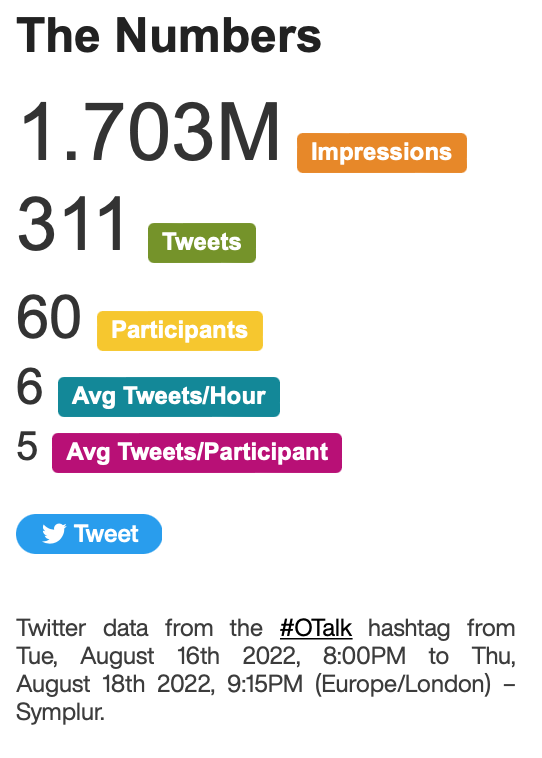
#OTalk Tuesday 29th March – Rough Sleeper Mental Health & Occupational Therapy.

This chat will be hosted by Danica Moller (@DanicaOT1) with Carolina Cordero (@colourful_OT) supporting from the @OTalk_ account.

Danica is an occupational therapist working in a rough sleeper mental health team, in London. Through OTalk tonight, she aims to explore the role of occupational therapy when working with people who are sleeping rough. 

Statistics regarding people who are sleeping rough, in the United Kingdom clearly indicate severe health inequalities and much poorer health outcomes. People who sleep rough over a long period of time face a higher likelihood of dying prematurely, with the average life expectancy of a rough sleeper in the UK being 44 years for a male and 42 years for a female (Health matters: rough sleeping, 2022; Office for National Statistics, 2022). Many who sleep rough have co-occurring mental ill health and substance misuse needs, physical health needs and have experienced and continue to experience, significant trauma (Health matters: rough sleeping, 2022). 

There is often a view that the solution to the numbers of people sleeping rough, is just having better access to housing. Whilst this can certainly be the case for some, there is a population of people sleeping rough whose mental health has not only been a contributing factor to their circumstances but also a barrier to getting back into appropriate accommodation. This is further challenged by what an individual faces in trying to access appropriate mental health assessment, treatment and care. This could be to do with services not being set up adequately, prejudice and assumptions that are made about them, and also strict inclusion criteria (Health matters: rough sleeping, 2022).  This could also include barriers that result from an individual’s cognitive and physical health, financial hardship, lack of awareness and understanding of the impact of mental health on their wellbeing or environmental restrictions such as lack of suitable transport and location (Baker and Jones, 2021). If the individual experiences substance dependence, as a high portion of people sleeping rough do, then the barriers to accessing services are even greater (Health matters: rough sleeping, 2022).  

So considering that occupational therapists are trained to explore and address both physical and mental health, what is the role for an OT within this population? Are we as a profession doing enough to support, address and advocate for the needs of rough sleepers?   

To explore this topic, tonight we will discuss the following questions:  

  1. Do you have experience working as an OT with rough sleepers? What can OT offer to people sleeping rough who present with mental health needs?
  2. What are the barriers someone who is sleeping rough faces trying to access mental health care? How can services better support engagement?  
  3. What are examples of occupational injustice that someone who is rough sleeping faces?  
  4. What standardised or non-standardised occupational therapy assessments could be used to gain an understanding of functional difficulties an individual sleeping rough faces? Consider some of the creative ways an OT could work to try and complete a thorough OT assessment, without having access to a standard ‘home’ or ‘hospital’ environment?  

 References

 â€˜Good work being undone’: 11,000 people slept rough in London during Covid-19. The Big Issue. (2022). Retrieved 9 March 2022, from https://www.bigissue.com/news/housing/good-work-is-being-undone-11000-people-rough-sleeping-in-london-in-covid-19/.

Baker, H., & Jones, G. (2021). Helping homeless people to reclaim and rebuild their lives. OTnews, (29(12), 18-21. 

Deaths of homeless people in England and Wales – Office for National Statistics. Ons.gov.uk. (2022). Retrieved 6 March 2022, from https://www.ons.gov.uk/peoplepopulationandcommunity/birthsdeathsandmarriages/deaths/bulletins/deathsofhomelesspeopleinenglandandwales/2019registrations#:~:text=The%20mean%20age%20at%20death%20for%20the%20identified%20homeless%20deaths,years%20and%2062.4%20years%20respectively.Health matters: rough sleeping. GOV.UK. (2022). Retrieved 12 March 2022, from https://www.gov.uk/government/publications/health-matters-rough-sleeping/health-matters-rough-sleeping

POST CHAT

Host:  Danica Moller (@DanicaOT1)

Support on OTalk Account: Carolina Cordero (@colourful_OT) 

Evidence your CPD. If you joined in this chat you can download the below transcript as evidence for your CPD, but remember the HCPC are interested in what you have learnt.  So why not complete one of our reflection logs to evidence your learning?

HCPC Standards for CPD.

  • Maintain a continuous, up-to-date and accurate record of their CPD activities.
  • Demonstrate that their CPD activities are a mixture of learning activities relevant to current or future practice.
  • Seek to ensure that their CPD has contributed to the quality of their practice and service delivery.
  • Seek to ensure that their CPD benefits the service user.
  • Upon request, present a written profile (which must be their own work and supported by evidence) explaining how they have met the Standards for CPD.
OTalk

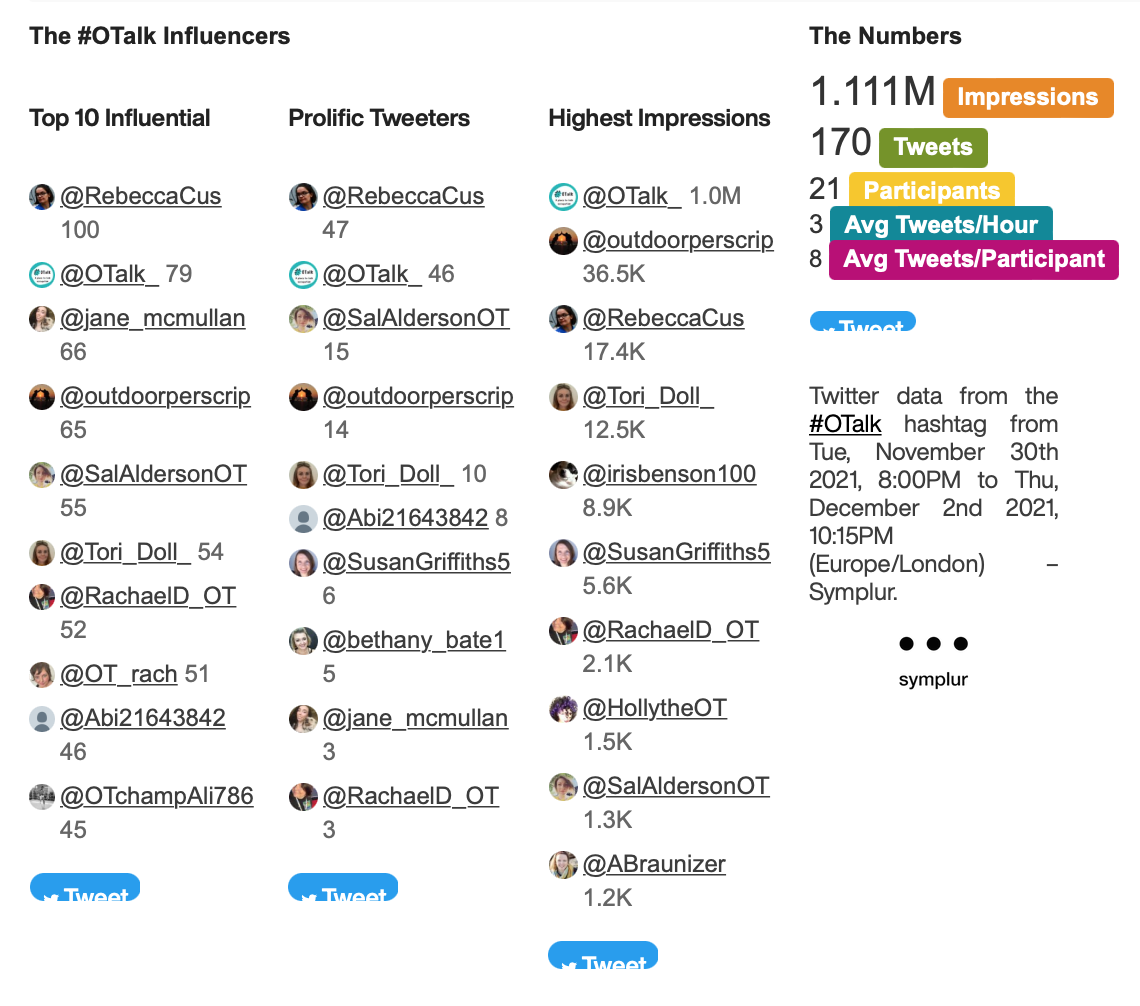
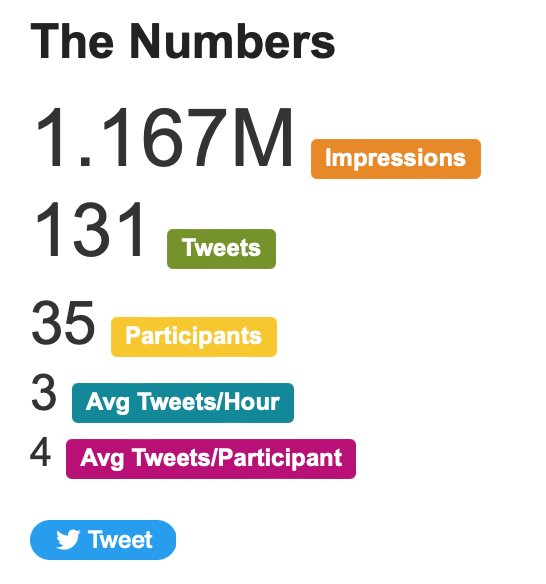
#OTalk – 30th November 2021 – Creating a Sensory Friendly Environment

This weeks chat will be hosted by Rebecca Cusworth @RebeccaCus.

Sensory integration is when our body and brain organises sensations which tell us about ourself and the environment (ASI Wise 2021). The senses including touch, vision, hearing, smell, taste, vestibular, proprioception, and introception (ASI Wise 2021). We receive sensory input from our sensory receptors, we process the sensory information, and then we generate a response to this (Miller 2006). An example of this process might be:

James is swinging on a swing. 
He is enjoying the sensation of moving through the air, the weightlessness at the top of the swing, and the heaviness when he is closest to the ground. He can hear the wind whistling in his ears and can see the ground moving along beneath him. While he swings, James holds onto the chains which he can smell are metal. James can tell he is becoming hungry so he waits until the next upward swing before jumping through the air. 

As all of us are sensory beings, we all have preferences for what we enjoy and dislike. For example, another person may feel motion-sick or afraid when swinging on a swing. When we are in our own homes, we might choose to dim the lights, to light scented candles, surround ourselves with comfy blankets, and eat food which makes us feel good (e.g., chocolate). 

When we are unwell, stressed, or in different environments (such as hospital, a friend’s house, workplace), we are less inclined to use our preferences to make ourselves feel better. 

This #OTalk chat aims to initiate the conversation about how we can create a sensory-friendly environment for ourselves and our patients. As occupational therapists, we are well placed to promote improvements in our services. 

Questions:

1. What is your understanding of sensory friendly environments?

2. What needs to change in your workplace to make it more sensory friendly for patients?

3. What needs to change to make your environment more sensory friendly for staff?

4. What do you feel would be challenging about putting this in place?

5. What support do you feel would be beneficial from RCOT or your Trust?

POST CHAT

Host:  Rebecca Cusworth @RebeccaCus.

Support on OTalk Account: Rachel @OT_Rach

Evidence your CPD. If you joined in this chat you can download the below transcript as evidence for your CPD, but remember the HCPC are interested in what you have learnt.  So why not complete one of our reflection logs to evidence your learning?

HCPC Standards for CPD.

  • Maintain a continuous, up-to-date and accurate record of their CPD activities.
  • Demonstrate that their CPD activities are a mixture of learning activities relevant to current or future practice.
  • Seek to ensure that their CPD has contributed to the quality of their practice and service delivery.
  • Seek to ensure that their CPD benefits the service user.
  • Upon request, present a written profile (which must be their own work and supported by evidence) explaining how they have met the Standards for CPD.

OTalk

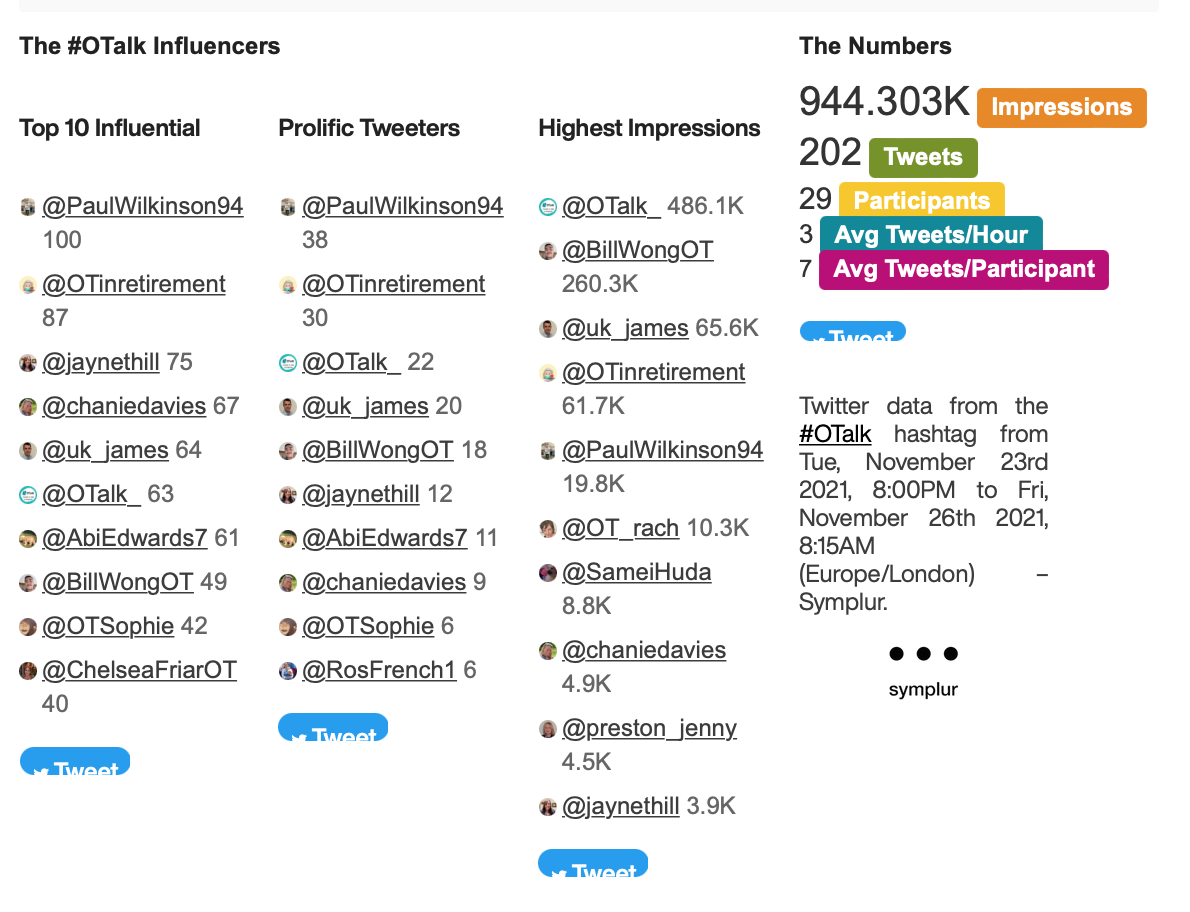
#OTalk – 23rd November 2021 – Occupational Therapy and Intermediate Care.

This weeks chat will be hosted by  Paul Wilkinson @Paulwilkinson94 who is a rotational occupational therapist currently working for South Tees Hospitals NHS Foundation Trust. 

It is evident that hospitals across the country are experiencing heightened demands and challenges during these unprecedented times. Whilst the National Health Service across the United Kingdom continues to strive to meet individual patient needs, it also continues to do battle and cope with the pressures from COVID-19, staff shortages, and increased hospital admissions. Consequently, the above factors mean hospital beds are in more of a demand than arguably ever before. 

Nationally it is recognised that the longer individuals remain in hospital the greater the risk of deconditioning and being diagnosed with hospital acquired infections can occur particular among the elderly and vulnerable. As occupational therapists we recognise that individuals thrive and recover often more effectively within their own environments. However, during a time of uncertainty it could be argued we are forced to consider discharge planning from the acute settings earlier than ever before, meaning often individuals are medically optimised but not fully from a therapy perspective. 

It seems to make hospital beds more accessible intermediate care settings and wider community settings are being utilised to bridge the clinical pathway for older individuals transitioning from the hospital to home more than ever before. According to The National Institute for Health and Care Excellence (2018) intermediate care services provide support for a short time to help individuals recover and increase independence. The service is often provided by a combination of health and social care professionals including occupational therapists. The Royal College of Occupational Therapists (2016) suggest occupational therapists working within intermediate care settings can help ensure smooth transition into the community.  

In April this year I was fortunate enough to rotate into an intermediate care setting based in the Northeast of England. Several months later working as an occupational therapist within this setting it became clear to myself through interaction with service users, relatives, and wider professionals the understanding of the role and purpose of an intermediate care setting and how occupational therapy fits into this setting was blurred and limited. This led me to further want to extend my understanding and gain insight amongst the occupational therapy community through #OTalk with the following questions:

  1. How would you best describe the purpose of an intermediate care setting? 
  2. Why do you think the purpose and understanding of intermediate care if often misunderstood? 
  3. What challenges do you think present to an occupational therapist working within an intermediate care setting? 
  4. What do you think are the benefits of an occupational therapist working within an intermediate care setting? 
  5. How do you think the role and purpose of an intermate care setting could be made clearer?  

POST CHAT

Host:  Paul Wilkinson @Paulwilkinson94

Support on OTalk Account: @kirstieot

Evidence your CPD. If you joined in this chat you can download the below transcript as evidence for your CPD, but remember the HCPC are interested in what you have learnt.  So why not complete one of our reflection logs to evidence your learning?

HCPC Standards for CPD.

  • Maintain a continuous, up-to-date and accurate record of their CPD activities.
  • Demonstrate that their CPD activities are a mixture of learning activities relevant to current or future practice.
  • Seek to ensure that their CPD has contributed to the quality of their practice and service delivery.
  • Seek to ensure that their CPD benefits the service user.
  • Upon request, present a written profile (which must be their own work and supported by evidence) explaining how they have met the Standards for CPD.
OTalk

#OTalk Research 2nd November 2021

This week our host is Sherri Kapadia  @ot_withsherri_

As part of our OT Week activities, Sherri will host this week’s chat on

The role of research in supporting occupational therapists to achieve health equity

Eliminating health inequalities are a priority in effective occupational therapy practice. In their simplest form, health inequalities consider the variations in people’s health status, which encompasses life expectancy and disease prevalence (Kings Fund, 2020). The evidence reflects that drivers of such differences in people’s health stem from social factors including education, income, gender and ethnicity (World Health Organisation, 2018). Equally, it is important to acknowledge who health inequalities occur between. Four main factors in which health inequalities are typically analysed are: socioeconomic factors, geographical location, characteristic (including ones protected by the law such as race and disability) and socially excluded groups (Kings Fund, 2020). 

For occupational therapists, tackling health inequalities has no defined pathway. However, we can begin by putting occupation at the centre of the solution. Occupational therapists may consider the impact that driving factors of health inequalities have on individuals’ engagement in occupation.  For example, health management is an occupation outlined in the Occupational Therapy Practice Framework (OTPF; AOTA, 2020), and within this is communicating with healthcare systems. Occupational therapists may seek to understand the systemic and social barriers to accessing healthcare that different groups may face. Occupational therapists can identify strategies that lessen these barriers and enable these groups to participate in health management activities. 

Alternatively, occupational therapists may consider the impact on participation that unequal health outcomes have on individuals’ engagement in occupation. Here, occupational therapist’s may seek to understand how a disease may influence a person’s participation in a particular occupation. For example, when interventions provided are not centred towards an individual’s needs, they may engage in occupations that temporarily reduce their symptoms but negatively impact their health in the long term. At this stage, occupational therapists may be well placed to help individuals manage their symptoms and find substitute occupations that can positively impact their health and lifestyle. 

Research is a crucial factor in highlighting the role of occupational therapy in tackling health inequalities and ensuring occupational therapy interventions are adaptable and, therefore, equally effective on different individuals. It is well known that occupational therapists work with a diverse range of clients. However, it is not well known if our evidence base reflects the same diversity. Therefore, it is crucial to acknowledge the role of research in helping occupational therapists to bridge the gaps in health inequalities. 

Furthermore, it is essential to acknowledge that the type of research needed to improve our understanding of health inequalities spans qualitative and quantitative methods. For example, the Richmond Group report, ‘You only had to ask: what people with multiple conditions say about health equity’, stated that statistical analysis between long-term conditions and socioeconomic status was evident. However, less research focused on exploring the lived experience of individuals facing these health inequalities (Richmond Group of Charities; Impact on Urban Health, 2021). This example reflects the need to analyse the impact of health inequalities from both an objective and subjective perspective. 

Additionally, the systemic drivers of health inequalities require those with lived experience to be at the forefront of research efforts. Facilitating co-produced or community-led research may ensure that occupational therapy interventions produce equitable outcomes and are meaningful to different individuals and groups. Further research is required to trial new and old interventions with various groups, understand the occupational needs that are not being acknowledged, and thoroughly examine our role in preventative measures. 

Through meaningful research, occupational therapists can enact significant change and be a part of providing equitable care for everyone. The questions below will hopefully provoke the conversation about conducting research in occupational therapy to support health equity for all. 

Questions

  1. What role do you think research plays in supporting health equity? Do you have examples to share?
  1. What evidence do we need to build upon to create greater health equity? What new evidence should the OT profession generate which highlights and provides solutions to overcoming health inequalities? 
  1. What methodological considerations do we need to address when designing and carrying out research which highlights and provides solutions to achieving health equity?
  1. Ethical research is essential. What ethical considerations might we need to consider when planning to research groups facing health inequalities?
  1. Health equity is an important issue. What are effective ways of disseminating new research in this area to ensure practicing OTs are aware of its findings and able to translate these findings into their practice? 

References

American Occupational Therapy Association. (2020). Occupational therapy practice framework: Domain and process (4th ed.). American Journal of Occupational Therapy74(Suppl. 2), Article 7412410010. https://doi.org/10.5014/ajot.2020.74S2001 


Kings Fund, Williams, E., Buck, D. and Babalola, G. (2020) What are health inequalities? Available at: https://www.kingsfund.org.uk/publications/what-are-health-inequalities (Accessed: 26/10/2021)

The Richmond Group of Charities and Impact on Urban Health (2021) You only had to ask
What people with multiple conditions say about health equity A report from the Taskforce on Multiple Conditions. Available at: https://richmondgroupofcharities.org.uk/sites/default/files/youonlyhadtoask_fullreport_july2021_final.pdf?utm_source=The%20King%27s%20Fund%20newsletters%20%28main%20account%29&utm_medium=email&utm_campaign=12554246_NEWSL_HWB%202021-08-09&dm_i=21A8,7H2X2,6W4S2E,UDUYQ,1 (Accessed: 26/10/2021)

World Health Organisation (2018) ‘Health inequalities and their causes’ 

Post Chat

Host:  This week our host is Sherri Kapadia @ot_withsherri_

Support on OTalk Account: @preston_jenny 

Evidence your CPD. If you joined in this chat you can download the below transcript as evidence for your CPD, but remember the HCPC are interested in what you have learnt.  So why not complete one of our reflection logs to evidence your learning?

HCPC Standards for CPD.

  • Maintain a continuous, up-to-date and accurate record of their CPD activities.
  • Demonstrate that their CPD activities are a mixture of learning activities relevant to current or future practice.
  • Seek to ensure that their CPD has contributed to the quality of their practice and service delivery.
  • Seek to ensure that their CPD benefits the service user.
  • Upon request, present a written profile (which must be their own work and supported by evidence) explaining how they have met the Standards for CPD.