OTalk

#OTalk – Tuesday 19th October 2021 -Assessing fatigue: capturing what counts?

This #OTalk is hosted by Dr Leisle Ezekiel

Fatigue is a common and distressing consequence of many neurological conditions and has long been an area of focus in occupational therapy, particularly for therapists working with people with progressive neurological conditions. But it is increasingly evident that fatigue is a significant problem for people living with acquired brain injury and is a distinct and direct consequence of brain injury. Estimates of prevalence vary from 21-77% and there is evidence that fatigue may last for many years (Wylie and Flashman 2017; Acciarresi, Bogousslavsky and Paciaroni, 2014; Headway, 2019).

Fatigue is a complex and subjective experience which is difficult to define as it overlaps with concepts of tiredness and with the symptoms of depression, sleep dysfunction and muscle weakness (Doncker et al 2018, Mollayeva et al 2014). It is therefore best thought of as multi- dimensional phenomenon that consists of different types of fatigue with varying signs and symptoms. Cantor et al (2014) conceptualise fatigue as encompassing โ€œpsychological, motivational, situational, physical, and activity-related componentsโ€ and define it as a: 

โ€œsubjective awareness of a negative balance between available energy and the mental and physical requirements of activitiesโ€ (Cantor et al 2014)pp491.

So to understand an individualโ€™s experiences of fatigue, we need to consider fatigue in the context of peopleโ€™s daily lives (including occupations and environments), the behaviour associated with fatigue (i.e. coping strategies) and their beliefs around fatigue and activity. However, it can be difficult to disentangle fatigue experiences from other consequences of brain injury. For example: is a lapse in concentration a sign of fatigue or do people tire more easily because they have difficulty with attention (Wylie and Flashman 2017)

There have been several attempts to develop a taxonomy or case definition of fatigue after stroke (Kluger et al 2013, Lynch et al 2007). Others suggest a need to consider in-the-moment experiences of fatigue (state fatigue) separately from the chronic experience of fatigue (trait fatigue) as state fatigue is more likely to be associated with fatigue-related behaviours, for example, the decision to do something or whether to stop and rest (GR. Wylie and Flashman 2017) State fatigue is measured using a numeric rating scale or visual analogue scale (e.g. 0-10, with 0 being no fatigue and 10 worst fatigue). 

This complexity of fatigue creates challenges when we start to assess and measure fatigue and is a challenge in the development of fatigue outcome measures. There is a myriad of fatigue scales and measures used within research but many of them were not developed for the ABI population and tend to conflate the consequences of ABI with fatigue symptoms.  They are also completed retrospectively and ask for a summation of experience and are less reliable for those with cognitive challenges. When using a fatigue scale we need to pay close attention to what the scale measures, is fatigue uni or multi-dimensional, does the scale capture severity, intensity or impact or a combination of these? 

As occupational therapists, we focus on enabling people to manage their fatigue effectively, so that they can participate in the daily activities that are most meaningful and necessary. To do that, we need to understand the individualโ€™s triggers, patterns of, and responses to fatigue so we can support them in developing and applying effective strategies.  But our assessment of fatigue is shaped by our conceptualisation of fatigue and depends on the tools we use to gather accurate and meaningful information about fatigue.  A survey of physiotherapists and occupational therapists highlighted significant differences in therapistโ€™s beliefs about fatigue, with potential for these differences to result in clients/patients receiving conflicting advice (Thomas et al 2019)

The questions for today are: 

  1. How do we as OTs conceptualise fatigue for people with neurological conditions?
  2. What tools are useful in gathering data about peopleโ€™s fatigue?
  3. What challenges do we experience in practice when gathering information about fatigue?
  4. How do we know assess whether our intervention has made a positive impact? 

References

Cantor JB, Ashman T, Bushnik T, Cai X, Farrell-Carnahan L, Gumber S, Hart T, Rosenthal J and Dijkers MP (2014) Systematic review of interventions for fatigue after traumatic brain injury: A nidrr traumatic brain injury model systems study. Journal of Head Trauma Rehabilitation. Lippincott Williams and Wilkins, 490โ€“497.

Doncker W de, Dantzer R, Ormstad H and Kuppuswamy A (2018) Mechanisms of poststroke fatigue. Journal of Neurology, Neurosurgery & Psychiatry. BMJ Publishing Group Ltd 89(3): 287โ€“293. Available at: https://jnnp.bmj.com/content/89/3/287 (accessed 06/08/21).

Kluger BM, Krupp LB and Enoka RM (2013) Fatigue and fatigability in neurologic illnesses: proposal for a unified taxonomy. Neurology. Neurology 80(4): 409โ€“416. Available at: https://pubmed.ncbi.nlm.nih.gov/23339207/ (accessed 06/08/21).

Lynch J, Mead G, Greig C, Young A, Lewis S and Sharpe M (2007) Fatigue after stroke: the development and evaluation of a case definition. Journal of psychosomatic research 63(5): 539โ€“44. Available at: http://www.ncbi.nlm.nih.gov/pubmed/17980228 (accessed 19/06/14).

Mollayeva T, Kendzerska T, Mollayeva S, Shapiro CM, Colantonio A and Cassidy JD (2014) A systematic review of fatigue in patients with traumatic brain injury: The course, predictors and consequences. Neuroscience and Biobehavioral Reviews. Elsevier Ltd 47: 684โ€“716. Available at: http://www.ncbi.nlm.nih.gov/pubmed/25451201 (accessed 23/12/14).

Thomas K, Hjalmarsson C, Mullis R and Mant J (2019) Conceptualising post-stroke fatigue: a cross-sectional survey of UK-based physiotherapists and occupational therapists. BMJ Open. British Medical Journal Publishing Group 9(12): e033066. Available at: https://bmjopen.bmj.com/content/9/12/e033066 (accessed 06/08/21).

Wylie GR and Flashman LA (2017) Understanding the interplay between mild traumatic brain injury and cognitive fatigue: models and treatments. Concussion. Future Medicine Ltd 2(4): CNC50. Available at: http://www.futuremedicine.com (accessed 13/05/21).

Wylie GR and Flashman LA (2017) Understanding the interplay between mild traumatic brain injury and cognitive fatigue: models and treatments. Concussion (London, England). Concussion 2(4): CNC50. Available at: https://pubmed.ncbi.nlm.nih.gov/30202591/ (accessed 06/08/21).

POST CHAT 

Host:  Dr Leisle Ezekiel

Support on OTalk Account: ย @helenotuk

Evidence your CPD. If you joined in this chat you can download the below transcript as evidence for your CPD, but remember the HCPC are interested in what you have learnt.ย  So why not complete one of our reflection logs to evidence your learning?

HCPC Standards for CPD.

  • Maintain a continuous, up-to-date and accurate record of their CPD activities.
  • Demonstrate that their CPD activities are a mixture of learning activities relevant to current or future practice.
  • Seek to ensure that their CPD has contributed to the quality of their practice and service delivery.
  • Seek to ensure that their CPD benefits the service user.
  • Upon request, present a written profile (which must be their own work and supported by evidence) explaining how they have met the Standards for CPD.
OTalk

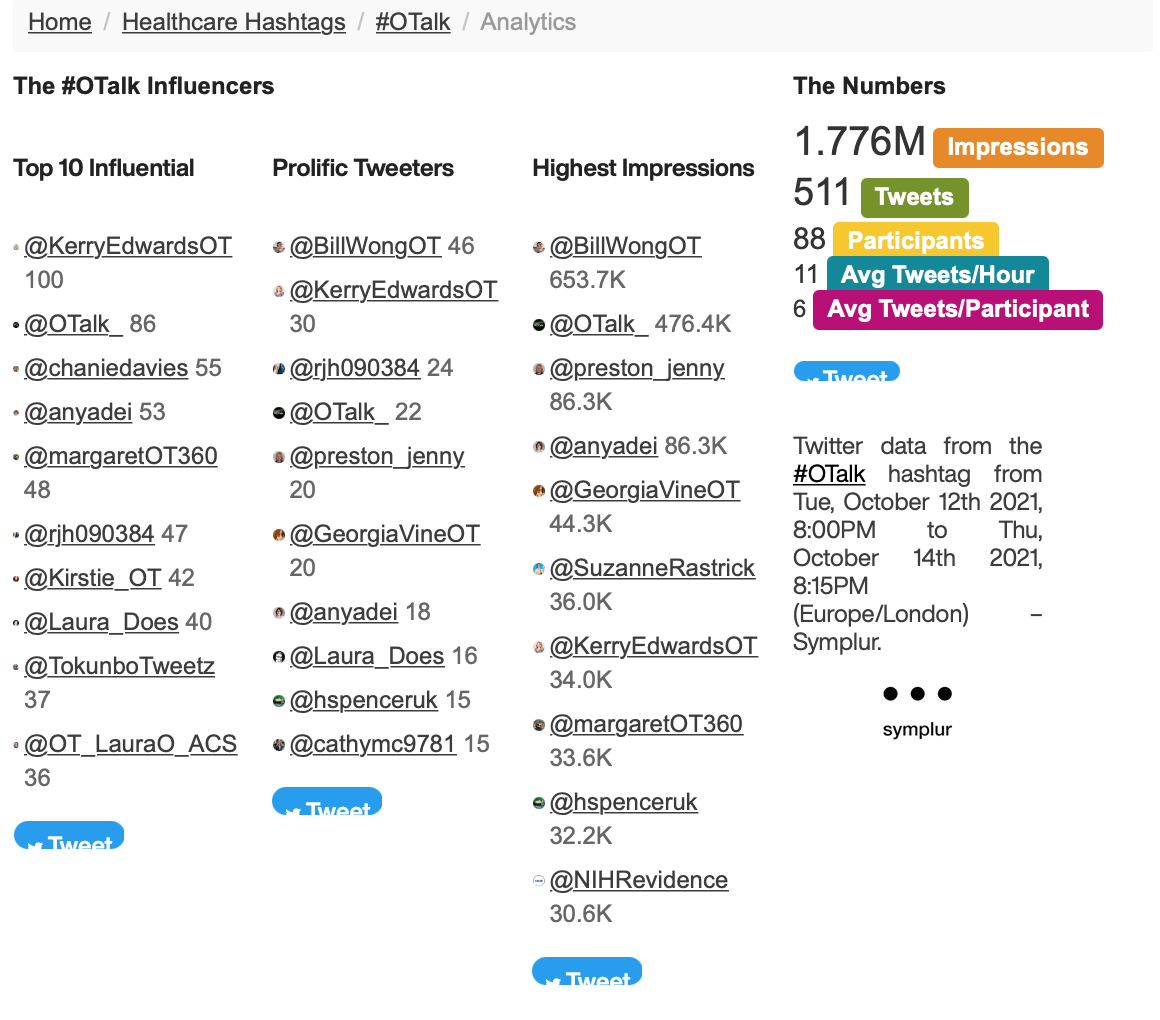
#OTalk -Tuesday 12th October 2021-How do you use social media for learning?

This #OTalk is hosted by Kerry Edwards.

Social media has become part of our everyday occupations. Originally social networking sites such as Twitter, Facebook, Instagram were set up for people to connect socially with friends and families. This has now evolved and has transformed how we communicate with each other on both personal and professional levels. Communicating on social media as a health care professional can be daunting both for people new to social media or for health care students using social media for professional communication, particularly as they may be conscious about upholding professional values and behaviours (RCOT, 2021; HCPC, 2020) in a social, public and open space. However, the literature identifies that there are several motivators for engaging in learning through social media over more traditional learning/CPD environments (Gilbert 2016; Hughs 2021; Murray and Ward 2017)   Social media offers increased accessibility; learning opportunities can be accessed at a convenient time and place from a mobile device. For example, you may access tonightโ€™s chat from the comfort of your armchair at home, or in the car whilst balancing other commitments such as family and work. Social media can also offer social and professional connectedness within the community of practice and/or opportunities to have informal conversations to gain national and international perspectives on topics of interest or opportunities to connect with other OTs or students that we may not normally connect with in our everyday lives. 

This tweet chat aims to discuss how this occupational therapy community of practice currently use social media for learning and continuing professional development.  When using the hashtag #OTalk this week you will be consenting that your tweet can be used as part of the data collection process for my research project. This is part of my studies towards a professional doctorate in education. Ethical Approval from the Cross-School Ethics Committee for Education, Language & Psychology at York St John University has been gained: the approval code is RECEDU00055. If you do not wish your tweets to be used, please contact me within 2 weeks of this OTalk chat, either by Twitter direct message or email me at k.edwards2@yorksj.ac.uk, and your tweets can be removed from the data set.  

Here are the questions that will be used to structure this weekโ€™s #OTalk 

  1. OTalk is celebrating itsโ€™ 10th anniversary this month. How long have you been joining in with the chat?
  2. What is your motivation for joining in with the OTalk chat? 
  3. What other activities on social media have you personally (and professionally) found useful to support your learning and development? โ€“ e.g., sharing of written articles and blogs, connecting with others. 
  4. How has the pandemic effected the way that you have engaged with your learning/CPD on social media over the past 18 months?
  5. Do you record your learning/CPD activities from social media? If so, how? 
  6. How would you like your learning on social media to be recognised in the future?  

References 

Gilbert S (2016) Learning in a Twitter-based community of practice: an exploration of knowledge exchange as a motivation for participation in #hcsmca. Information, Communication & Society, 19:9, 1214-1232,

HCPC (2020) Guidance on the use of social media. Available from https://www.hcpc-uk.org/standards/meeting-our-standards/communication-and-using-social-media/guidance-on-use-of-social-media/. Accessed 01/10/21 

Hughs K (2020) The use of Twitter for continuing professional development within occupational therapy, Journal of Further and Higher Education, 44:1, 113-125,

Murray, K., Ward K (2017). Attitudes to Social Media Use as a Platform for Continuing Professional Development(CPD) within Occupational Therapy. Journal of Further and Higher Education. 43:4 545-559 

Royal College of Occupational Therapists (2021) Professional standards for occupational therapy practice, conduct and ethics. London, RCOT 

POST CHAT 

Host:ย ย Kerry Edwards

Support on OTalk Account:ย Kirstie @kirstieot
Evidence your CPD. If you joined in this chat you can download the below transcript as evidence for your CPD, but remember the HCPC are interested in what you have learnt.ย  So why not complete one of our reflection logs to evidence your learning?

HCPC Standards for CPD.

  • Maintain a continuous, up-to-date and accurate record of their CPD activities.
  • Demonstrate that their CPD activities are a mixture of learning activities relevant to current or future practice.
  • Seek to ensure that their CPD has contributed to the quality of their practice and service delivery.
  • Seek to ensure that their CPD benefits the service user.
  • Upon request, present a written profile (which must be their own work and supported by evidence) explaining how they have met the Standards for CPD.

OTalk

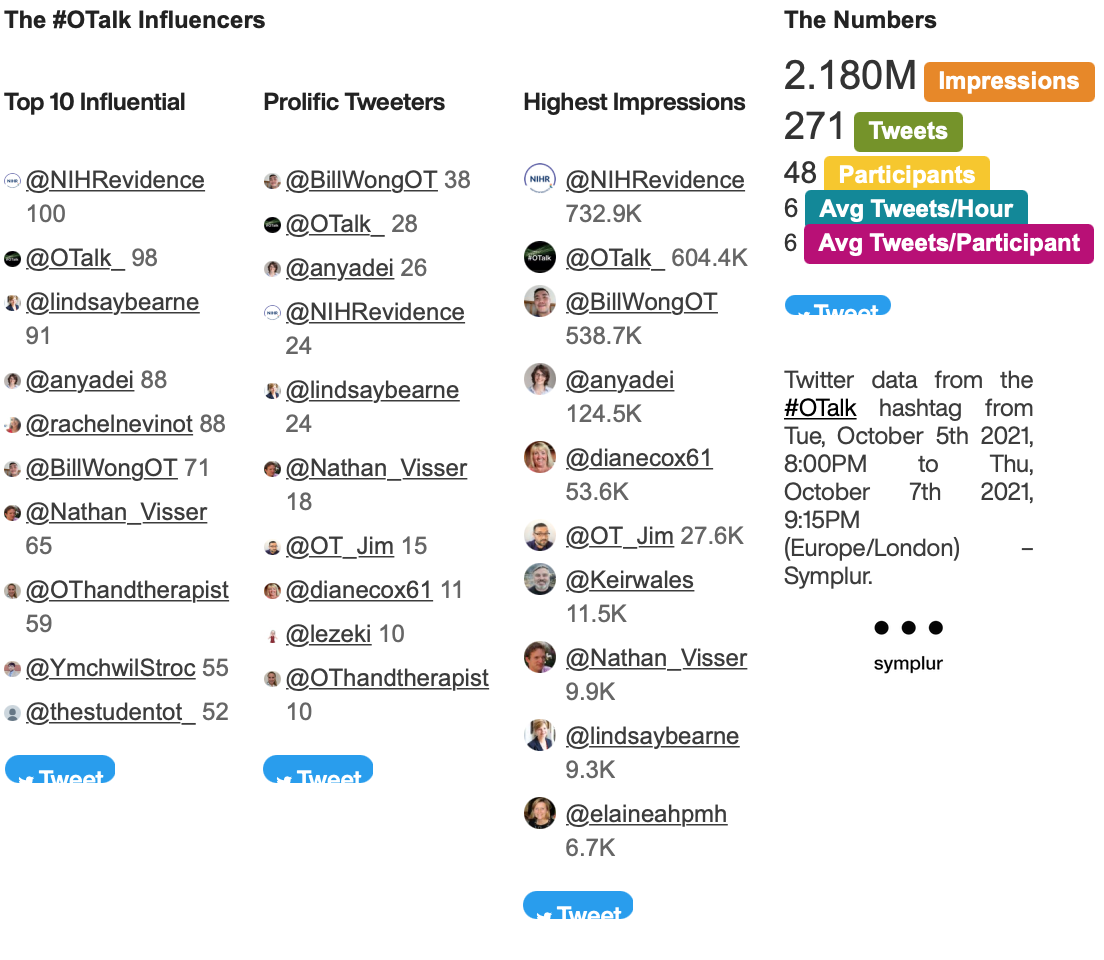
#OTalk Research – Tuesday 5th October 2021 – How can we use new research to address the unmet need for rehabilitation in people with long-term conditions?

This weekโ€™s chat will be co-hosted by @NIHRevidence and @lindsaybearne a Senior Research Fellow in Knowledge Mobilisation at the  NIHR Centre for Engagement and Dissemination, . 

In 2017, WHO launched the Rehabilitation 2030 initiative, which laid out the increased need for rehabilitation due to an ageing population and increasing incidence of people with multiple long term conditions. They urged governments to improve their rehabilitation offerings. 

However, since the COVID pandemic,  rehabilitation services have decreased. This has affected people with long-term conditions, diminishing their health and wellbeing.  A group of charities and professional bodies have teamed up (called the Community Rehabilitation Alliance) and, together, they have called for a new national strategy for rehabilitation

We, at NIHR Evidence, have  collated some of the evidence on innovative approaches to rehabilitation for people with long-term conditions that have been published as NIHR Alerts. Our Collection, authored by Professor Lindsay Bearne, explores some new ways  to deliver rehabilitation effectively and cost-effectively. It  includes studies exploring telerehabilitation, workforce innovations by involving other staff members, and novel training for professionals. The Collection argues that implementing new research will enable us to โ€˜Move forward strongerโ€™ to address the unmet need for rehabilitation. 

Why not join this weekโ€™s #OTalk to share your thoughts on how we can draw on new research to optimise rehabilitation delivery for people with long-term conditions. And discuss how innovative approaches could meet the needs of individuals in an effective and cost-effective way. 

The questions

In the #OTalk discussion we will use the following questions to structure the discussion but please feel free to join in with other questions and perspectives:

  • What are the key challenges to delivering person-centred rehabilitation? 
  • How can new ways of working, such as training non-specialist staff or telerehabilitation, help address the unmet need? 
  • What research is needed to help improve rehabilitation services? 
  • What do you think governments and policy makers need to do to address the unmet need for rehabilitation?
  • How do you access rehabilitation research evidence? 

Resources

POST CHATย 

Host:ย  @NIHRevidence and @lindsaybearne ย Support on OTalk Account:ย @Preston_jenny
Evidence your CPD. If you joined in this chat you can download the below transcript as evidence for your CPD, but remember the HCPC are interested in what you have learnt.ย  So why not complete one of our reflection logs to evidence your learning?

HCPC Standards for CPD.

  • Maintain a continuous, up-to-date and accurate record of their CPD activities.
  • Demonstrate that their CPD activities are a mixture of learning activities relevant to current or future practice.
  • Seek to ensure that their CPD has contributed to the quality of their practice and service delivery.
  • Seek to ensure that their CPD benefits the service user.
  • Upon request, present a written profile (which must be their own work and supported by evidence) explaining how they have met the Standards for CPD.

OTalk

25th October 2021 #OTalkTurnsTen – Help us Celebrateย 

This October 25th 2021 #OTalkTurnsTen Can you believe it? We have a number of things lined up to celebrate, including a few surprises, and we require the OTalk community to help with three of them. 

  1. Share why you love #OTalk #OTalkTurnsTen
  2. Bake #OTalk a birthday cake and share it #OTalkDoesBakeOff 
  3. Apply to become a member of either the #OTalk team or the #OTalk Research team #BecomeAnOTalkTeamMember

Share the Love #OTalkTurnsTen

Can you tell us what you like about #OTalk and why you engage?   We would love the community to share this, in tweets, video clips, or even a blog post, feel free to share on any of our social media platforms, using the hashtag #OTalkTurnsTen from now until our Birthday on 25th October.  

So start thinking and start sharing your memories and thoughts,  here are a few suggestions to get you started. 

  • What do you love about #OTalk? 
  • How did you find out about #OTalk?
  • What is your most Memorable #OTalk chat?
  • What has #OTalk meant for your career?
  • Have you ever had a light bulb moment during #OTalk?
  • Have you ever hosted a chat? What was that experience like? 
  • Have you met any of the #OTalk team in person?  Share any pictures/videos.
  • Have you ever been put on the naughty step for forgetting to include the hashtag?
  • Did you come to one of our meetup events at a conference, what was it like?

Remember when sharing always include  #OTalkTurnsTen   By sharing you are giving @OTalk_ permission to use content*


Bake #OTalk a Birthday Cake #OTalkTurnsTen #OTalkDoesBakeOff

As the Great British Bake Off has returned, and has the cheek to air during our time slot, Tuesdays 8pm, we would love you to make @OTalk_ a birthday cake. We are looking forward to seeing how creative the OTalk community is at this meaningful occupation.  The #OTalk team will be sharing their efforts too, trust us there will be some funny ones.  

So get baking and don’t forget to share your images (no matter the outcome, it’s the processes that are important) on social media used the three hashtags #OTalkTurnsTen #GBBO #OTalkDoesBakeOff

By sharing you are giving @OTalk_ permission to use content*


Become an #OTalk or #OTalk Research Team member #OTalkTurnsTen #BecomeAnOTalkTeamMember

#OTalk is a free resource for the community and is run by volunteers.  #OTalk aims to remain a free resource, and anything that team members might get involved in that has a cost attached is self funded by that member.  It can be a demand on your free time, but it’s worth it, and it can be fun. Plus as a team we have always supported each other.  

The #OTalk research team currently has only two members who work solely on identifying hosts and curating 12 research chats a year on the 1st Tuesday of the month.    There is some admin involved including posting blog posts and communicating with hosts, plus supporting the monthly chat.  You will not be required to do every month as this will be shared with other research team members. You will be given some mentoring to start with. If you’re interested in research and have some basic knowledge of Twitter and other platforms this might be a perfect voluntary role for you.  Itโ€™s a great opportunity for you to develop your networks within the research community too.

The #OTalk team currently has 6 members,  this team might be a little more demanding on your time.  Jobs that the team shares include; . 

  • Maininting the blog/website
  • Managing the email account
  • Managing and liaising with those that offer to host
  • Posting blog posts 
  • Collecting data and transcripts of chats
  • Taking it in turns to support the weekly chats
  • Liaise with anyone contacting the team via Twitter, Facebook, Instagram and email
  • Promoting #OTalk at events e.g. manning a stall and/or running workshops or giving presentations about #OTalk and social media as a CPD and Therapeutic tool, when invited to do so at OT events across the UK. This is self funded. 
  • Working with stakeholders such as The RCOT and The OT show on projects.

So if you’re a fan of doing lots of work, just for the joy of it; think of yourself as an OTGeek; want to network more;  and develop your organisational, social media and tech skills then you might just be a good fit.  We will of course give guidance and support. 

Send us an expression of interest by email here.ย otalk.blog@gmail.com

Lastly we have a few other surprises in store; including a 10th Birthday Gift for you, but more about that later! We can’t wait to see what you come up with!!!!

*By sharing posts using any of these hashtags  #OTalkTurnsTen #GBBO #OTalkDoseBakeOff  You are consenting to the OTalk team using what you have shared, to promote our birthday.  We do not keep any personal information, but will search social media for your posts using the hashtags and share them across all of our platforms.

OTalk

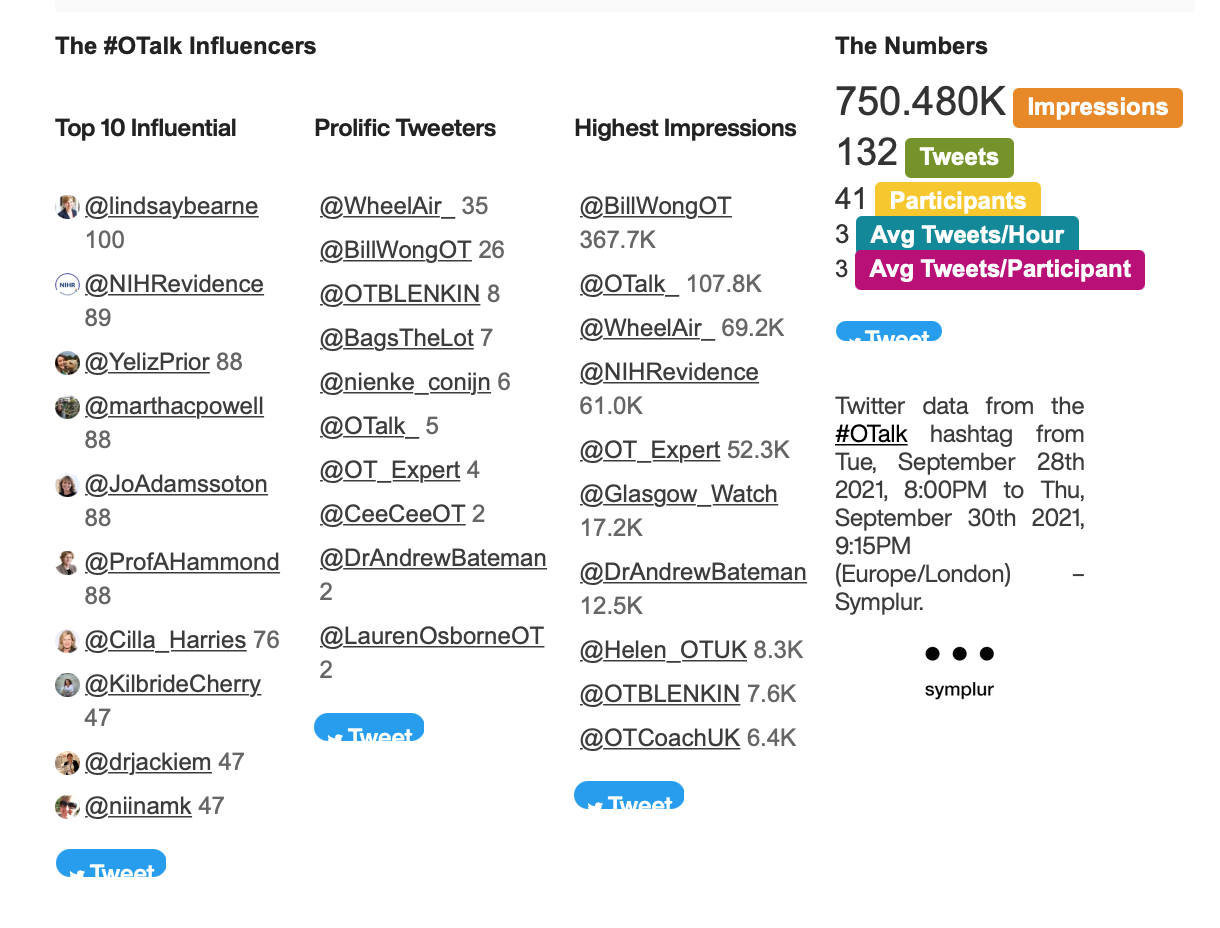
#OTalk 28th September 2021 – Thermoregulation for wheelchair users: preventing problems with heat and moisture

This #OTalk is hosted by @WheelAir_

Overheating, over-sweating and excessive moisture build-up are common complaints among wheelchair users. Either due to a medical condition or restrictive seating configurations, many wheelchair users struggle to control heat and moisture levels in the seat contact areas.

At WheelAir, we feel that there is a general lack of understanding and awareness of how heat and moisture complications manifest and how serious an issue thermoregulation can be for wheelchair users.

Overheating

The body uses four mechanisms to maintain thermoregulation: conduction, convection, radiation and evaporation. However, for people with sweating dysfunction, caused by a spinal cord injury for example, no evaporation heat loss can take place. Such overheating drastically heightens the risk of developing heat stress or fatigue, as well as other issues such as heat-induced seizures and muscle spasms. Having to โ€œjust deal withโ€ overheating and warm environments can, therefore, be very dangerous for wheelchair users if precautions arenโ€™t taken.

Over-sweating and moisture build-up

Similarly, over-sweating or excessive moisture build-up can have serious consequences for wheelchair users. This is because the skin microclimate – that is, the temperature, humidity and airflow next to the skin surface – is an indirect pressure ulcer risk factor. Temperature and humidity affects the structure and function of the skin, lowering possible damage thresholds for the skin and underlying soft tissues. Even for people who are unable to sweat, such as those with a complete SCI, excessive moisture build-up is a problem. Even when not sweating, the skin releases moisture automatically through a much more passive process called transepidermal water loss (TWL). This is an unavoidable process and, of course, TWL increases when someone is sitting all day.

Research on heat and moisture

The team at WheelAir has spent the past 5 years researching heat and moisture to better understand how to recognise symptoms. We have now created a clinical assessment toolkit to improve the efficiency of evaluating heat and moisture risks for wheelchair users. The toolkit is designed to better inform and educate those involved in the decision-making and reimbursement processes, such as OTs, about the prevention or treatment of heat and moisture related complaints, such as pressure injuries or skin rash.

We want to facilitate OTalk to discuss these newly devised clinical tools and hear from OTs about their experiences of handling heat and moisture issues for wheelchair users.

About WheelAir

The WheelAir system is the first temperature control system designed to fit any wheelchair. All of our products are designed to disperse air evenly across the wheelchair contact area to lower the userโ€™s core temperature and keep the skin dry and clean.

The very first WheelAir was brought to life in 2015 by our Managing Director, Corien Staels, as her final university project during her textiles degree after her university tutor, who was a wheelchair user, told Corien of the problems associated with overheating. Intrigued, Corien wanted to know more and discovered that overheating in a wheelchair is not only very uncomfortable, but also potentially dangerous. She learned that people were using ice-packs and water sprays to keep cool and it seemed ridiculous to her that in this day and age, there wasnโ€™t a technological solution. And so she came up with the WheelAir concept – a simple idea that has already made a lot of impact. Ultimately, WheelAirโ€™s vision is to create a world where every wheelchair user feels comfortable and in control of their temperature.

QUESTIONS:

1. We have had a very hot summer, what symptoms have you seen for wheelchair user clients in the past few months? How have they been managing staying cool and avoiding overheating?

2. Similarly, have moisture related issues been more of a challenge during the hot summer months? Are people struggling with sweating too much, skin issues like rashes, and finding it difficult to stay cool and dry?

3. In general, what types of symptoms do you see with heat and moisture related issues for wheelchair users? How often do you see these as issues for wheelchair users?

4. If a client has heat and/or moisture related symptoms, what do you usually suggest for solutions?

5. How can training about overheating, sweat, and microclimate management improve for Occupational Therapists that work with wheelchair users?

POST CHAT 

Host:ย ย @WheelAir_

Support on OTalk Account:ย  @colourfulot

Evidence your CPD. If you joined in this chat you can download the below transcript as evidence for your CPD, but remember the HCPC are interested in what you have learnt.ย  So why not complete one of our reflection logs to evidence your learning?

HCPC Standards for CPD.

  • Maintain a continuous, up-to-date and accurate record of their CPD activities.
  • Demonstrate that their CPD activities are a mixture of learning activities relevant to current or future practice.
  • Seek to ensure that their CPD has contributed to the quality of their practice and service delivery.
  • Seek to ensure that their CPD benefits the service user.
  • Upon request, present a written profile (which must be their own work and supported by evidence) explaining how they have met the Standards for CPD.