Blog Posts

OTalk

Celebrating 14 Years of OTalk: Reflecting on Our Shared Journey

Today, on 25 October 2025, we celebrate 14 years of OTalk – a community that began with a simple but powerful idea: to bring occupational therapists, students, and anyone interested in our profession together for open conversation, shared learning, and connection.

OTalk launched on Tuesday 25 October 2011, marking the very first of what became a long tradition of Tuesday evening chats at 8 pm. The aim was to create a regular online space where occupational therapists could meet to discuss ideas, reflect on practice, and build a sense of community across settings and geographical boundaries.

When OTalk began, social media was still finding its place in professional life. Twitter (as it was then known) offered a new opportunity to connect, discuss, and reflect in real time. That first chat set the tone for what would become a thriving weekly event, one that shaped a generation of occupational therapists’ approach to professional development, connection, and reflection.

From Hashtags to a Community of Practice

Over time, OTalk grew into a recognised and respected space for continuing professional development (CPD). Each week, occupational therapists, students, educators, and researchers came together to explore themes that mattered to them from leadership and creativity to wellbeing, inclusion, and evidence-based practice.

The OTalk Team, entirely volunteer-led, made all of this possible. The project was (and remains) grassroots in every sense, shaped and sustained by the energy, time, and commitment of occupational therapists who believed in the value of collective reflection.

From its earliest days, OTalk also went beyond the tweet. The team began to challenge the perception that social media was not a professional space. We presented locally and nationally on how Twitter could be used as a tool for CPD, reflective practice, and even as an intervention in promoting participation and engagement. These conversations helped shift professional thinking about how social platforms could be harnessed for good within health and social care.

You can read more about OTalk’s story – and the volunteers who helped make it what it is – on our website: History of OTalk

You can also learn about the former OTalk Team members who helped build and sustain this community over the years.

Adapting and Evolving

As the digital landscape changed, so too did OTalk. The transition from Twitter to X, alongside the removal of free scheduling tools and restrictions on interaction, made running weekly chats increasingly difficult for a volunteer-led team.

In 2023, after twelve years of continuous weekly conversations, we made the decision to pause and reflect on how best to continue supporting our community in the future.

That reflection led to a new chapter. This year OTalk relaunched through the Royal College of Occupational Therapists (RCOT) Communities platform, providing a dedicated space for members to connect, share ideas, and learn together in a supportive environment.

However, we also recognised that hosting OTalk exclusively through the RCOT platform made it inaccessible to those who are not RCOT members. OTalk has always prided itself on being open to all, from students and early-career therapists to retired practitioners and international colleagues. We are now exploring future platforms to ensure OTalk’s reach can expand again, while remaining true to its roots as a grassroots, volunteer-led project that values openness and inclusivity above all else.

Why OTalk Still Matters

Fourteen years on, OTalk’s purpose remains as strong as ever: to provide space for dialogue, reflection, and connection across the occupational therapy community.

We are proud that OTalk has:

  • Offered an accessible and inclusive platform for reflection and shared learning
  • Connected occupational therapists across roles, settings, and countries
  • Supported students and new practitioners to find confidence and belonging
  • Amplified voices often under-represented in professional spaces
  • Challenged perceptions of social media and demonstrated its value for professional growth
  • Adapted creatively to changing technology and professional needs

Looking Ahead

We are delighted to share that OTalk is growing again. Over the past month, we have welcomed new team members, who bring fresh energy and ideas to help shape the next phase of our community. We will introduce them soon, and we are excited for what lies ahead.

As we look to the future, we remain guided by the same principles that have sustained us for 14 years: accessibility, inclusion, curiosity, and shared learning.

Join the Celebration

To everyone who has ever joined a chat, hosted a discussion, or supported OTalk in any way,  thank you. You have helped create something special that continues to shape and strengthen the occupational therapy community.

We would love to hear your reflections as part of today’s celebration:

  • How did you first discover OTalk?
  • Did you ever host a chat or join one that inspired you?
  • What is your favourite OTalk memory?

Please share your memories below. Your voices, as always, are what make this community what it is.

Here’s to 14 years of conversation, connection, and collaboration and to the next chapter of OTalk.

OTalk

#OTalk Research – Tuesday 5th September 2023 – Developing a research community network for occupational therapists.

Sadly this will be OTalk last every chat, please join us for one last twitter chat. Don’t forget the hashtag!

Hosts: Dr. Gill Ward, Head of Research and Innovation, Royal College of Occupational Therapists

Dr. Elizabeth Taylor, Research and Development Manager, Royal College of Occupational Therapists

OTalk support: Nikki Daniels

Title: Developing a research community network for occupational therapists.

We’ve enjoyed a fabulous seven years of bringing members of the occupational therapy community together to connect around topics related to research. But sadly, this will be our last #OTalk Research.  In this final chat, @DrGillianWard and @ElizaTay1  will help us to reflect on how networks have supported us to develop our research confidence and capability and to think about how RCOT Research Connect could offer us a space to continue to connect. 

Background 

RCOT Research Connect is a UK-wide virtual occupational therapy research networking space for RCOT members, hosted on a closed LinkedIn group.

The purpose of the RCOT Research Connect is to support the development of a research community for networking, mentoring, information sharing and to advance research capability and capacity in the occupational therapy profession across the UK. It aims to enable occupational therapists to support each other to develop and use the research evidence base to the improve services we offer to the individuals, groups and communities we work with.

Network members are free to post content relevant to research, this could include: 

  • a research-related question to start a discussion on the group
  • signposting members to a research resource
  • a link to a funding opportunity, research studentship, or study participation 
  • a research paper or piece of work. 

Any RCOT member is welcome to join the network. We strive to create an inclusive community where everyone feels encouraged to get involved with research. We have 52 occupational therapy research champions at all levels of practice, across all four UK nations who have volunteered to give regular time to support the network.

We are running a 6-month pilot started in April and plan to evaluate the network and it’s use in October. 

Even if you’re not a member of RCOT Research Connect at the moment (but we do hope you’ll join us), we’d really love to hear all of the creative ideas that you can come up with as we move into the evaluation phase of the RCOT Research Connect pilot.

The questions forming the basis of our #OTalk discussion are:

  1. Can you share with us your experiences of being part of a network or community that has supported you to develop your research confidence and capability?
  2. What would be the advantages of joining the RCOT Research Connect Network for you personally? 
  3. What would encourage you and your peers to join our network? 
  4. Many people join networks, but how can we encourage active contribution and participation? 
  5. Finally, how do you think we can we best support the aim of the network; “to support the development of a research community for networking, mentoring, information sharing and to advance research capability and capacity in the occupational therapy?”.  

If you’re not a member and you’d like to join Research Connect before the OTalk, first set up a LinkedIn account if you don’t already have one, and then follow this link to join the closed group.

Click ‘Join’ and your request will be sent for approval. As the network is a member benefit, we’ll need to check your RCOT membership number before you can join the group. This might take a day or two, but we’ll do our best to approve this as soon as we can.

Thank you, we look forward to chatting with you.

OTalk

#OTalk – End of an era but not the end of us!

OTalk has been run by innovative volunteer occupational therapists and students since its beginning. As one of the first professions to acknowledge the potential of social media for connection, promotion, and community development, the founders faced skepticism and dismissive attitudes from others in the field who considered it unprofessional.

On October 25th, 2011, OTalk was launched on World Occupational Therapy Day, providing occupational therapy staff and students with a weekly opportunity to engage in discussions related to the profession and wider occupational sciences every Tuesday night at 8pm. The goal was to showcase Twitter as a valuable tool for learning and networking, with no financial cost, to those who engaged, while also challenging traditional approaches in the field.

Over the years, the team behind this free continuing professional development (CPD) opportunity has grown. More information about past and current members can be found by reading about them on the about the team members page

As the team expanded, so did the opportunities for others to learn. OTalk team members wrote articles, presented at conferences, and were even mentioned in the Francis report as promoters of online professionalism. In 2016, they published an editorial in the British Journal of Occupational Therapy and launched #OTalk Research, hosting monthly research-themed chats with a subset of practitioners, on the 1st Tuesday of the month.

OTalk became a regular presence at the Royal College of Occupational Therapist yearly conference, with team members showcasing their enthusiasm for the platform and live-tweeting from reserved front-row seats. During one conference, they collaborated with RCOT to gather reviews of sessions on their blog site.

People from all over the world began applying to host chats, on a diverse range of topics. From the connection between occupation and identity, psychological approaches in occupational therapy, preparation for OT interviews, occupational alienation, expectations of a CQC visit.

To explorations of occupational science, the role of occupational therapy in public health, the identity and responsibilities of occupational therapists in the charity sector, occupational therapy’s role in addressing domestic violence, journal clubs, intersectionality and why occupational therapists should be aware of it, improving BAME representation in OT, underrepresentation, authenticity, and career progression. You can search for topics we have covered via the search function on this blog site.

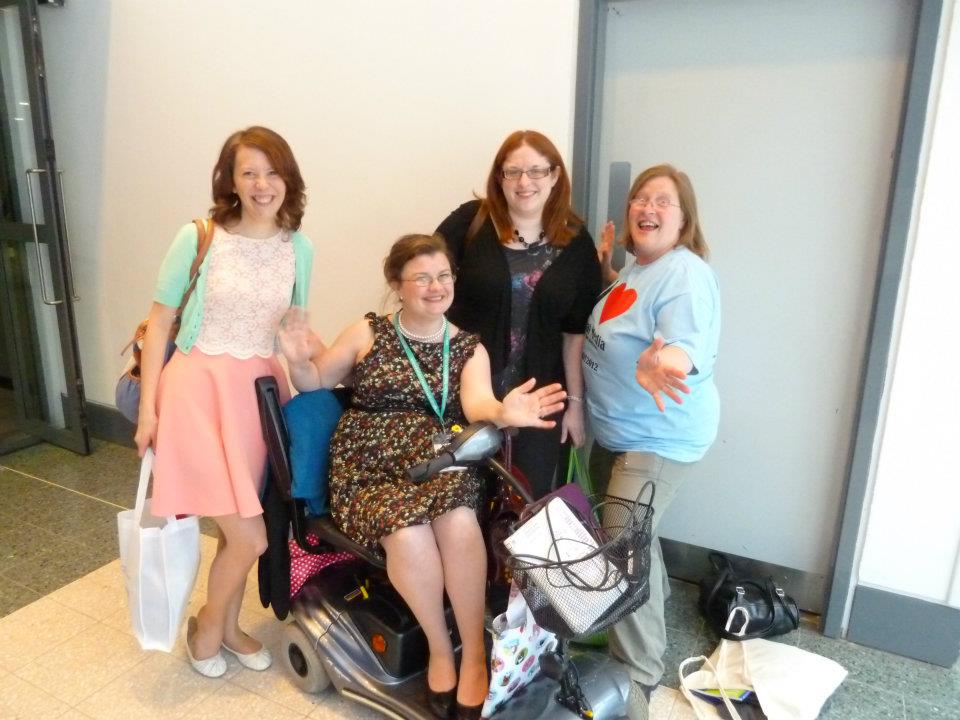
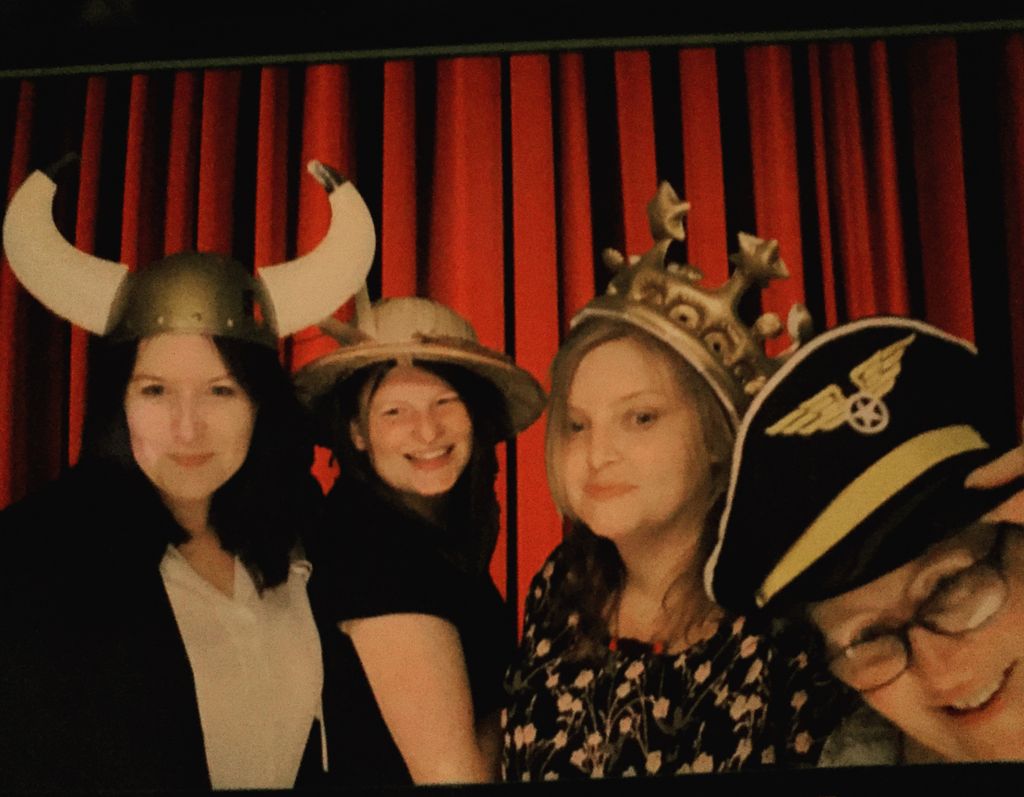
In preparation for this blog post, past and present team members shared their favorite memories, ranging from OTalk tea parties and crafts to face-to-face meet-ups affectionately known as #OTalkOnTour. 

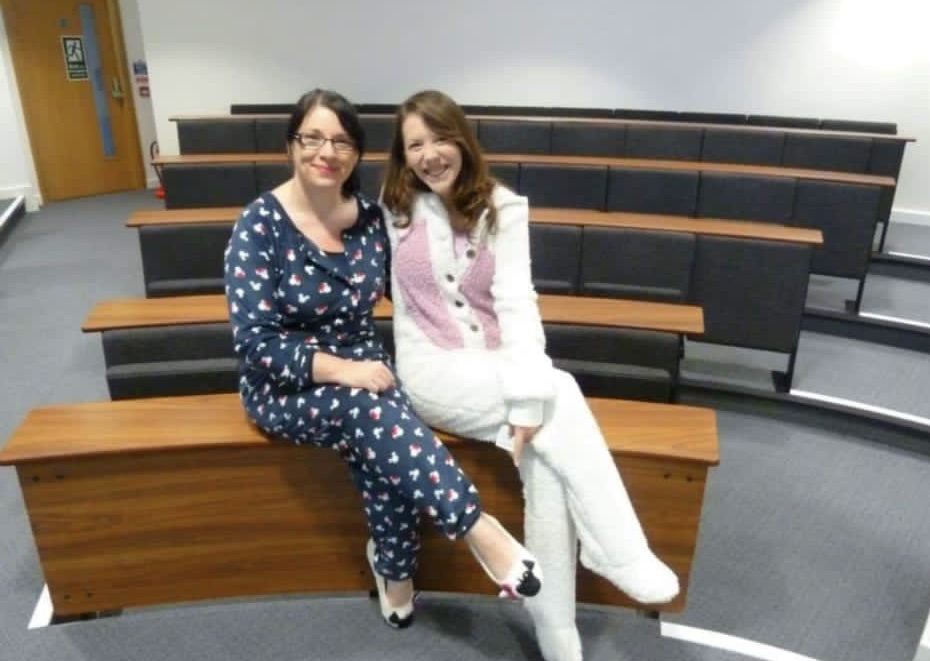
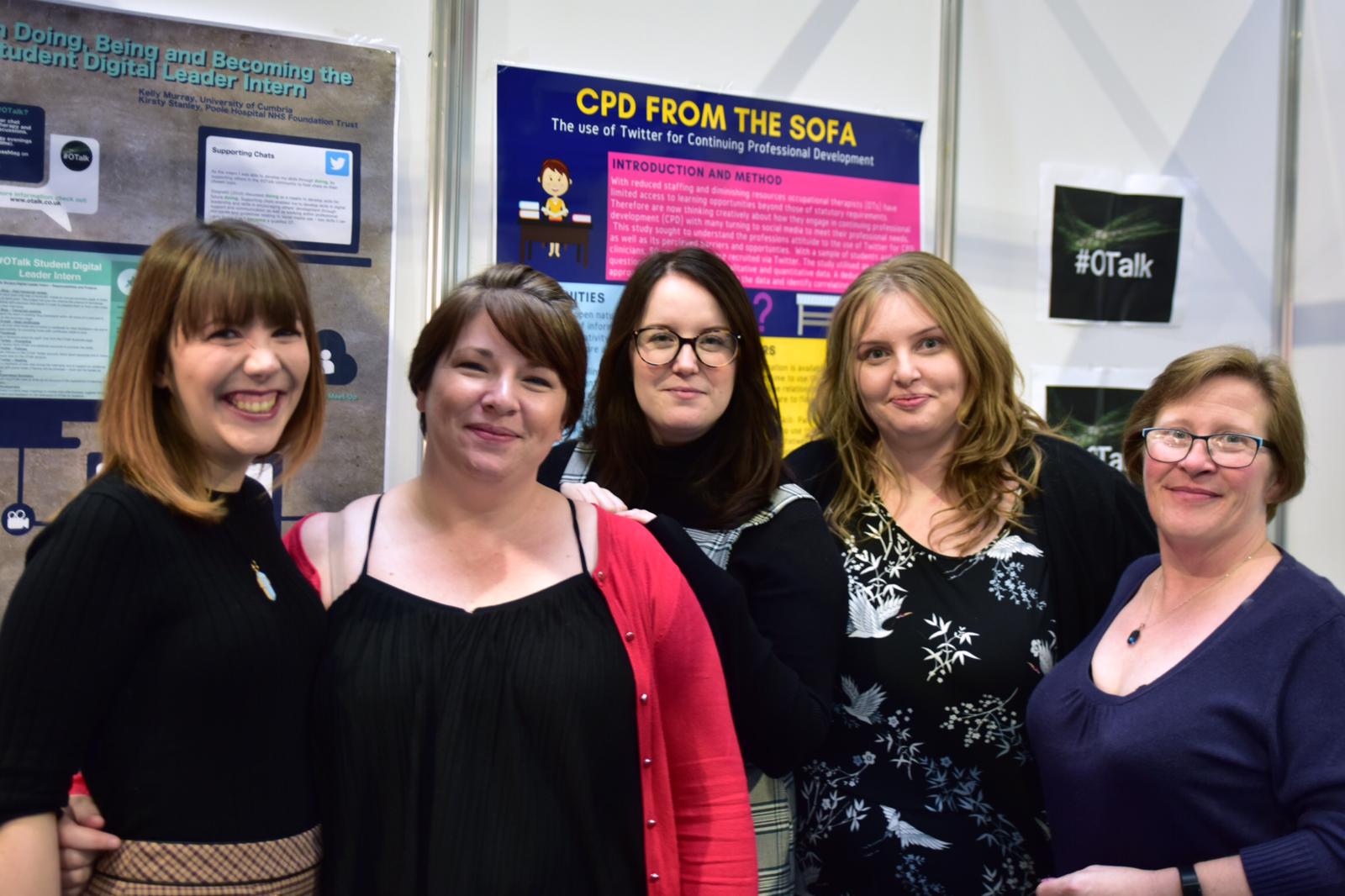
Standout memories included running around Bournemouth University in onesies, and experiencing a peculiar adaptation of a shower in the southeast. Hosting information stalls at regional student events. Our involvement in The OT show from its beginning working on collaborations with speakers holding OTalk chats in the lead up to the show held at the NEC, we also presented on professional use of social media or ran information stands every year.

Other great memories include hiding under conference tables eating cookies, gate crashing more than one RCOT conference dinner, and celebrating team members’ life events together. 

OTalk has been referred to in at least four Elizabeth Casson Memorial Lectures, the lectureship is awarded to an RCOT member whose peers consider them to have made or be making a significant contribution to the development of the profession. 

We had a revamp as part of our ten year celebration in 2021, updating the logo tagline and website.

One chat that left a lasting impact was the Dark Side of Occupation, playing a significant role in further developing the concept. Additionally, some OTalk’s in recent years inspired the formation of OT affinity groups, which have brought great pride.

Recent changes on the Twitter platform have made it increasingly difficult for OTalk volunteers to maintain this free resource. Tools and platforms that were relied on, such as Tweetdeck and Symplur, have either disappeared or now require paid membership on the newly branded X platform. Unfortunately, the team has concluded that Twitter or X is no longer sustainable for hosting this free resource.

Nevertheless, the team remains committed to keeping the OTalk brand alive and collaborating with others to explore new avenues for professional connection and growth. OTalk would be nothing without its community of tweeters that joined us week in, week out. We want to thank everyone who has made OTalk the success it became. In this ever changing world as technology moves on so must we, please let us know your OTalk memories and any ideas or suggestions for OTalk’s future as they navigate this next chapter.

OTalk

#OTalk Tuesday 25th July 2023 8pm – Waiting – hosted by @chaniedavies and @anyadei

This week @chaniedavies and @anyadei are hosting an #OTalk

We’ve been waiting to do this #OTalk for over a year now! In writing our paper for Journal of Occupational Science, Understanding the Occupational Impact of Waiting using Occupational Science Concepts, we talked a lot about waiting… and really wanted to explore the topic with as many OTs and colleagues as possible, hence this OTalk!

The more we delved into the concept of waiting, and tried to use occupational science to understand it, the more questions we had! For the purpose of the article, we focused on the waiting that our patients do within the setting of healthcare (partly in due to the media headlined on this topic!), but we both shared many personal experiences of waiting with each other  through the process of creating the paper (including waiting for peer review!), that we really came to recognise how waiting is such an intrinsic part of our experiences as occupational beings.

Looking into the literature, there seems to have been a lack of curiosity exploring the impact of waiting – in particular with occupational science literature. Given its impact on occupational performance, roles and routines, and the link of these to health and wellbeing, it seemed we needed to use the power of occupational science to better understand this most human of experiences.

And fundamentally, turn this insight into ways to help people ‘wait well’, and minimise the impact of their occupations. For background, it might be helpful to read the full paper: https://tandfonline.com/doi/full/10.1080/14427591.2023.2209781… Here is a sneak preview of the questions we are going to pose!

The Questions

  1. Have you got examples of when you have seen waiting impact you or your patients as occupational beings?
  2. Waiting is so multifactorial, so lets also consider those time when waiting is a positive part of the occupation itself… can you share any examples?
  3. How might we recognise the waiting within and across our systems and services, and the impact of this?
  4. Do you think that waiting is an occupation in itself, or a form of occupational disruption? Q5. How can we support individuals to wait well?

OTalk

#OTalk – Tuesday 18th July – Exploring holidays from an occupational lens

This #OTalk wants to explore holidays from an occupational lens.

Holidays can be important part of overall occupational routines in an individuals life. They can be aimed at periods of rest or can be more action packed and adventure seeking. They are perhaps most easily defined as a difference in routine (and often but not necessarily, location) from that individuals usual pattern. Despite traditional stereotyped images often associated with holidays, in terms of what is done, when it is done and how it is done, the truth will be that as with other occupational choices each individual will have their own preferences and there will be no one size fits all approach to holidays.

This #OTalk will discuss the following:

  1. What does the word holiday mean for you? and does it have any specific associations?
  2. What do you think are the benefits or challenges of holiday periods?
  3. Do you have any hints, tips or intervention ideas for holidays?
  4. Have you previously considered this topic or included it in your practice of Occupational Therapy? If not, why not?
  5. What have you gained from this #OTalk that will prompt you into further thought or action with regard to holidays for those who you work with or your own life?