OTalk

#OTalk Research Tuesday 6th September 2022 “So, have you considered writing a totally different article?”: Navigating the peer review process. Hosts: @Keirwales and @preston_jenny

Hosts: Keir Harding and Dr Jenny Preston 

In our recent OTalk Research team catch up, we got chatting about the recent scandal involving the publication of a paper by a PhD researcher, with somewhat questionable ethical standards.  

As you can imagine, our collective thinking was ‘how on earth did that get past peer review?’

Those of us who have trodden the often-arduous path of publication in a peer reviewed journal know all too well how challenging this process can be. No doubt many have likely avoided the process at all costs, aware of the blackened reputation of the peer review culture.

The pitfalls are many! A reviewer with a personal bias, contradictory reviews from reviewer 1 and that renowned tricky reviewer 2 and feeling like the reviewer just didn’t get it! Were they the right person to review your topic and/or methodology? Did they give your paper the time and attention your hard crafted work truly deserved?

Though it’s not always plain sailing, it’s not always bad news either. Peer reviewers also offer supportive, constructive feedback that can often lead to an improved submission.

Data suggests that only 1.2% of manuscripts submitted to journals are accepted for publication1. So, when you have something important to share, findings from your work that you want to disseminate and information to communicate to the wider world, only to be derailed by the peer review process, how do we get the most out of peer review, how can we prepare ourselves for it and how we can view this as a constructive experience?

Our colleague Keir Harding has spoken candidly on social media about his repeated failure to get his MSc dissertation published in a peer reviewed journal. He has had success though, with three publications in the Lancet and others in CAMH, MHRJ and most importantly BJOT.  Opinion pieces he can get published, research not so much.  

We asked Keir to join us for this month’s OTalk research to discuss the peer review culture

Suggestions for Questions:

1. What are your experiences or your understanding of the peer review process for publication?  

2. How has the peer review process affected your confidence and ability to write for publication? (for better or worse)

3. What have you learnt from the review process that could or has helped you to be a peer reviewer?

4. What changes to the peer review process do you think would help improve the dissemination of occupational therapy research? 

5. What are your top tips for those who have yet to go through the peer review process?

6. Do you have anything else to share about the peer review process or stories to tell us about reviewer 2?

Reference

1. https://www.editage.com/insights/top-peer-review-challenges-for-authors-and-how-you-can-solve-them

POST CHAT

Host:  Keir Harding  @Keirwales and Dr Jenny Preston @preston_jenny

Support on OTalk Account: Nikki Daniels @NikkiDanielsOT

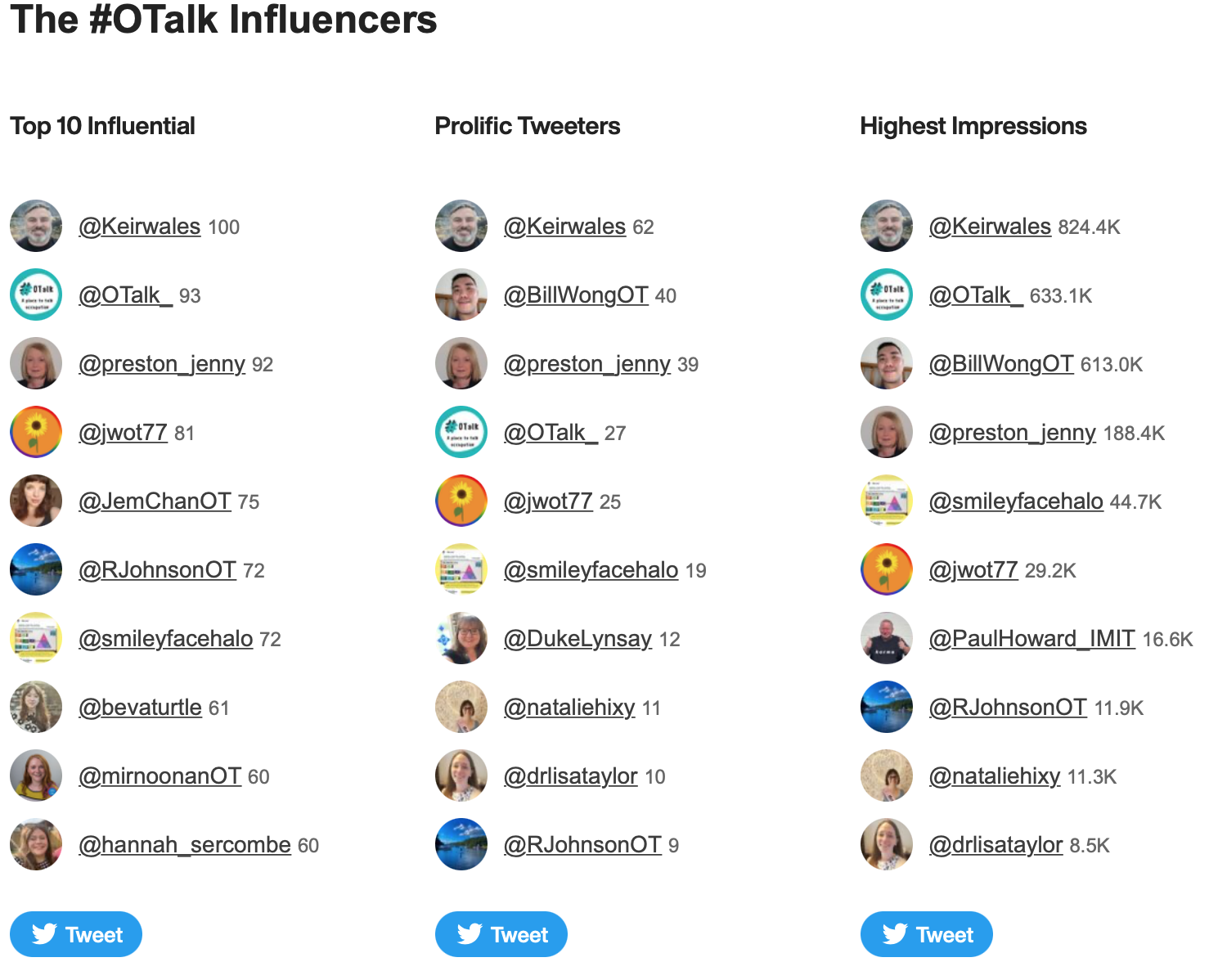
Evidence your CPD. If you joined in this chat you can download the below transcript as evidence for your CPD, but remember the HCPC are interested in what you have learnt.  So why not complete one of our reflection logs to evidence your learning?

HCPC Standards for CPD.

  • Maintain a continuous, up-to-date and accurate record of their CPD activities.
  • Demonstrate that their CPD activities are a mixture of learning activities relevant to current or future practice.
  • Seek to ensure that their CPD has contributed to the quality of their practice and service delivery.
  • Seek to ensure that their CPD benefits the service user.
  • Upon request, present a written profile (which must be their own work and supported by evidence) explaining how they have met the Standards for CPD.

OTalk

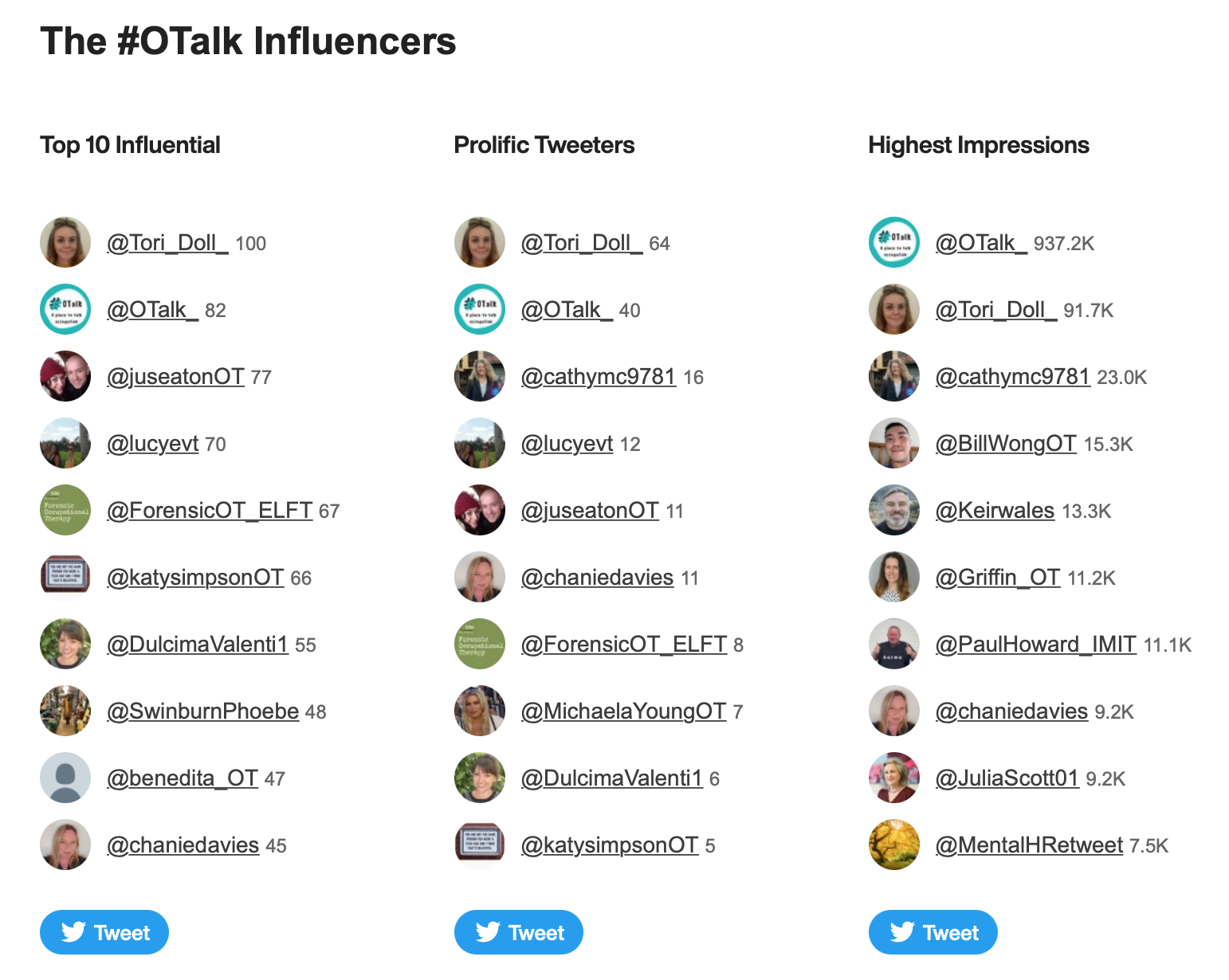
#OTalk 30th August 2022 – The role of Occupational Therapy in Seclusion and Long-Term Segregation. Hosted by @Tori_Doll_

This week’s chat will be hosted by Tori Wolfendale @Tori_Doll_ here is what she has to say.  If you’re new to OTalk find out here how to join in live on twitter every Tuesday 8pm Supported by Rachel

Tori is employed as the Head of Rehabilitation and Recovery Service within a High Secure Forensic mental health service and is currently completing a Professional Doctorate in Health and Social Care – with the focus of her research being on enhancing coproduction within forensic mental health services, promoting the role of Occupational Therapy and how the profession can positively contribute to reducing restrictive interventions and in enhancing the patient “voice” within this to collaboratively identify novel practical solutions or approaches to progressing patients out of the seclusion environment.  

What is known regarding seclusion and long-term segregation from contemporary literature: 

In the United Kingdom (UK), patients are admitted to secure forensic services because they are deemed to pose a risk of violence to others and are considered a grave risk to members of the public (O’Dowd, 2022). This is linked to having a history of serious violence, risk to self and presenting with challenging behaviour (Holley et al., 2020). In addition to this, many of the individuals detained within secure services will have a complex mental health history or chronic psychiatric disorders and demonstrate a significant level of risk to themselves or others, which requires care and treatment within the secure environment (Puzzo, 2022).

The term ‘long-term segregation’ (LTS) is defined in the Mental Health Act Code of Practice (2015) as a highly restrictive intervention “which is only used when a patient is considered to present with chronically high-risk behaviours or potential of serious harm to other people that cannot be managed in a less restrictive manner”.

Whilst it has been argued that restraint and the use of seclusion and segregation are necessary for maintaining patient and staff safety, Wilson et al., (2017) propose that these approaches continue to be frequently used in contemporary practice. Furthermore, Ezeobela et al., (2014) argues that these practices have negative consequences on all stakeholders, with staff and patients reporting feelings of distress, anxiety, fear and experiencing a loss of identity, resulting in further emotional distress and social isolation. What is known from contemporary literature is the use of seclusion, LTS and restraint has been shown to have adverse effects on the therapeutic milieu, damage to patient and staff relationships and are perceived by staff to be incompatible with caring values that are a core aspect of working within any healthcare environment (Chaung and Huang, 2007). Supplementarily, there is also a growing body of literature that recognises that simply witnessing restraint or the use of restrictive interventions can have negative psychological implications for mental health patients and staff (Wilson et al., 2007; Holmes et al., 2015; Price et al., 2017). However, with austerity, underfunding, the current impact of the global pandemic and the associated staffing and resource deficits, the exponential growth in segregation across secure mental health services is becoming increasingly problematic (Chandley, 2022).  

Where does Occupational Therapy fit into this? 

One of the key political drivers within forensic services specifically, is that care providers must implement measures to enhance the experience, independent living skills and quality of life for patients with long-term conditions by ensuring that their care consists of a minimum of 25 hours of meaningful activity each week. This can pose a challenge for patients in long-term segregation as by definition, the patient is “specifically placed alone in a locked room for a period at any time of the day or night for the protection of the patient, staff or others from serious harm” (Newton-Howes, 2013, p. 422), which can significantly reduce their opportunities to engage in activities outside of their room. Additionally, the National Institute for Clinical Excellence (NICE) guidelines argues for the least restrictive measures to be used at all times and that the use of seclusion should be a last resort (NICE, 2021).  The Occupational Therapy profession contributes to this process by prescribing meaningful activity as a therapeutic tool, based on the individual’s preferences and needs. Ozkan et al., (2018) remind us that individuals who need forensic rehabilitation experience considerable participation limitations when engaging in meaningful activities, causing occupational deprivation, a sense of hopelessness and these limitations can contribute to a deterioration in mental health and wellbeing. Furthermore, the aim of Occupational Therapy in this environment is to enable the individual to experience occupational enrichment and achieve optimal functioning through engaging in meaningful activity to mitigate risk (Ozkan et al., 2018).

Questions for you to consider in preparation for the #OTalk community: 

  1. What is your experience of working with patients who require the use of seclusion or long-term segregation? 
  2. How do you remain client-centred throughout this process? 
  3. What are the challenges or barriers to working effectively with patients who require the use of seclusion or long-term segregation? How does this influence your clinical practice? How do you overcome these? Please share any key learning outcomes. 
  4. What are the positive factors when working with patients who require the use of seclusion or long-term segregation? Please share any key learning outcomes.
  5. What best practices have you identified through your experience?
  6. What evidence-based practice do you use to underpin your practice when working with patients who require the use of seclusion or long-term segregation?
  7. What models of practice do you use to underpin your clinical practice when working with patients who require the use of seclusion or long-term segregation? How does this influence your practice? 
  8. Has COVID19 had any influence on your practice when working with patients who require the use of seclusion or long-term segregation?
  9. Finally … please share one specific success story – let’s use this as an opportunity to really showcase with the wider Twitter Community the fantastic work that Occupational Therapist’s complete with this complex patient group! What was this? Why was this successful? What was the impact?

POST CHAT

Host:  Tori Wolfendale @Tori_Doll_

Support on OTalk Account: Rachel @OT_rach

Evidence your CPD. If you joined in this chat you can download the below transcript as evidence for your CPD, but remember the HCPC are interested in what you have learnt.  So why not complete one of our reflection logs to evidence your learning?

HCPC Standards for CPD.

  • Maintain a continuous, up-to-date and accurate record of their CPD activities.
  • Demonstrate that their CPD activities are a mixture of learning activities relevant to current or future practice.
  • Seek to ensure that their CPD has contributed to the quality of their practice and service delivery.
  • Seek to ensure that their CPD benefits the service user.
  • Upon request, present a written profile (which must be their own work and supported by evidence) explaining how they have met the Standards for CPD.
OTalk

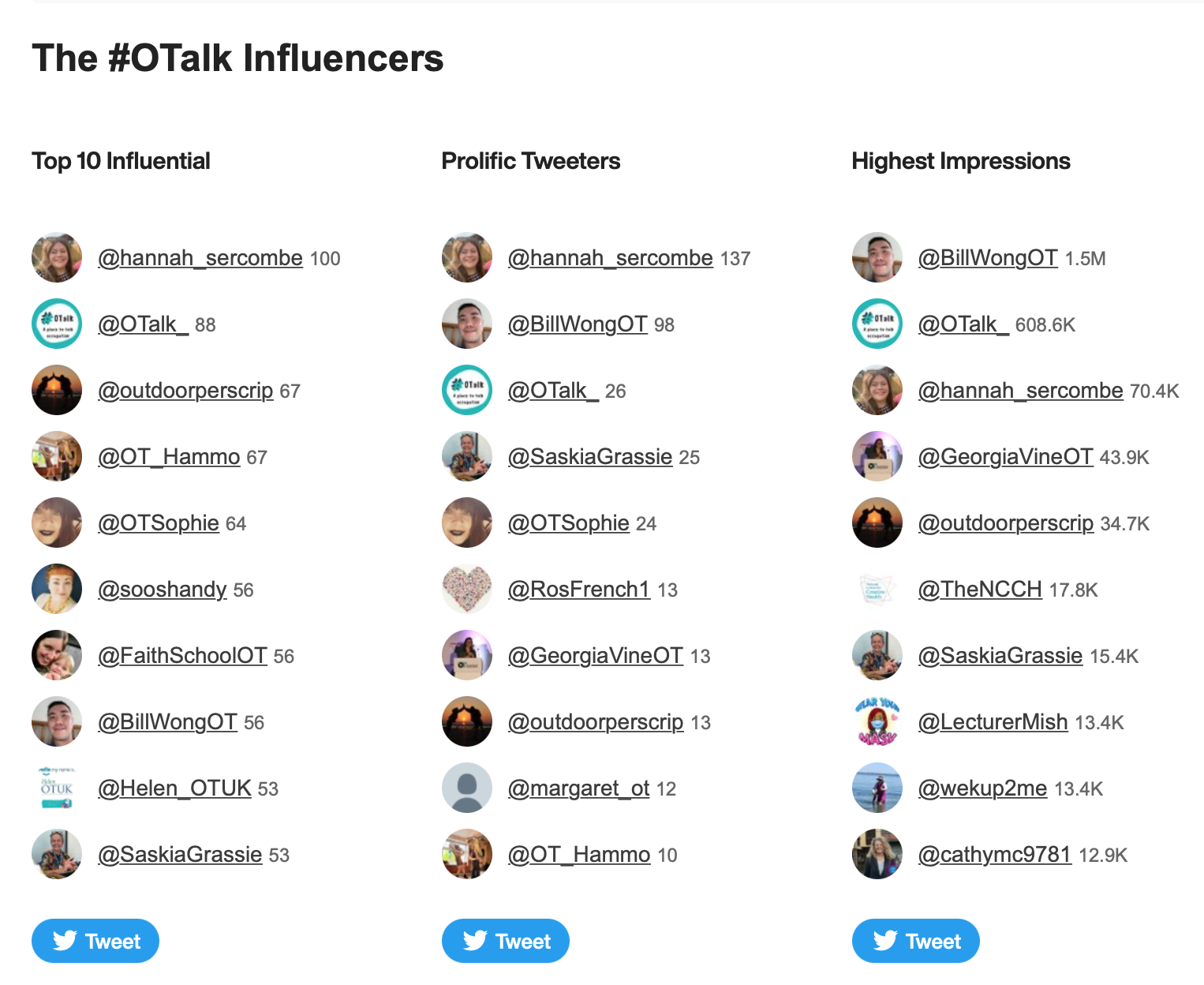
#OTalk 23rd August 2022- Creative Health: What is it and where do OT’s fit in? hosted by @hannah_sercombe

This weeks OTalk is hosted by @Hannah_sercombe here is what she has to say.  If your new to OTalk find out here how to join in live on twitter every Tuesday 8pm  Supported by Helen.

‘Creative Health’ refers to creative approaches and activities which have benefits for our health and wellbeing. Activities may include visual and performing arts, crafts, film, literature as well as creative activities in nature; approaches may involve creative and innovative ways to approach health and care services, co-production, education and workforce development’.  

The past decade has seen an increasing interest in the role for Creative Health in promoting health, as well as in the prevention, management and treatment of illness across the life course, and its potential to mitigate some of the challenges facing the health, social care and wider systems (Warran et al., 2022, WHO, 2019). The All Party Parliamentary Group on Arts, Health and Wellbeing report  “Creative Health: The arts for health and wellbeing” provides a comprehensive overview of the field, documenting over 1000 studies of the arts supporting health and wellbeing (APPG, 2017). 

Based on the belief that meaningful activity engagement is essential to human flourishing, Occupational Therapists have actively engaged with this approach since the establishment of the profession.  It has been 15 years since Lord Nigel Crisp, at the time NHS Chief Executive, stated “arts and heath are, and should be firmly recognised as being integral to health, healthcare provision and healthcare environments” (DOH, 2007). Although progress has been made, the present state of the UK’s health and wellbeing cries out for more sustainable approaches to tackling health need and inequalities, OTs have a vital role to play in meeting these challenges.  

If you are an OT who implements creativity into practice, are interested in applying Creative Health to enhance your work with people, or want to find out more about how creative health can be embedded in Occupational Therapy, please join us next Tuesday at 8pm, using the hashtag #OTalk.  

We hope this chat will inform a webinar hosted in collaboration between The Royal College of Occupational Therapists and The National Centre for Creative Health between 10-1pm 31st of October 2022. This webinar will demonstrate the profession’s role in working creatively in and with the creative sector to address people’s health and care in innovative ways, showcasing several successful examples to highlight the opportunities that exist for the OT profession in and beyond statutory (NHS and Social Care) services.  

Questions 

  1. What brings you along to discuss Creative Occupational Therapy? 
  2. What innovative creative approaches are you using to address health need and in what context? 
  3. What impact have you seen from creative practice? 
  4. How does OT contribute to good #creativehealth practice? 
  5. What could better support you to implement #creativehealth into your practice? 

References​

APPG 2017. Creative Health:The Arts for Health and Wellbeing In: GROUP, A. P. P. (ed.). 

DOH 2007. Departmental Report. In: HEALTH, D. O. (ed.). 

WARRAN, K., BURTON, A. & FANCOURT, D. 2022. What are the active ingredients of ‘arts in health’ activities? Development of the INgredients iN ArTs in hEalth (INNATE) Framework [version 2; peer review: 1 approved, 1 approved with reservations]. Wellcome Open Research, 7. 

WHO 2019. What is the evidence on the role of the arts in improving health and well-being? 

POST CHAT

Host:  @Hannah_sercombe

Support on OTalk Account: Helen @HelenOTUK

Evidence your CPD. If you joined in this chat you can download the below transcript as evidence for your CPD, but remember the HCPC are interested in what you have learnt.  So why not complete one of our reflection logs to evidence your learning?

HCPC Standards for CPD.

  • Maintain a continuous, up-to-date and accurate record of their CPD activities.
  • Demonstrate that their CPD activities are a mixture of learning activities relevant to current or future practice.
  • Seek to ensure that their CPD has contributed to the quality of their practice and service delivery.
  • Seek to ensure that their CPD benefits the service user.
  • Upon request, present a written profile (which must be their own work and supported by evidence) explaining how they have met the Standards for CPD.
OTalk

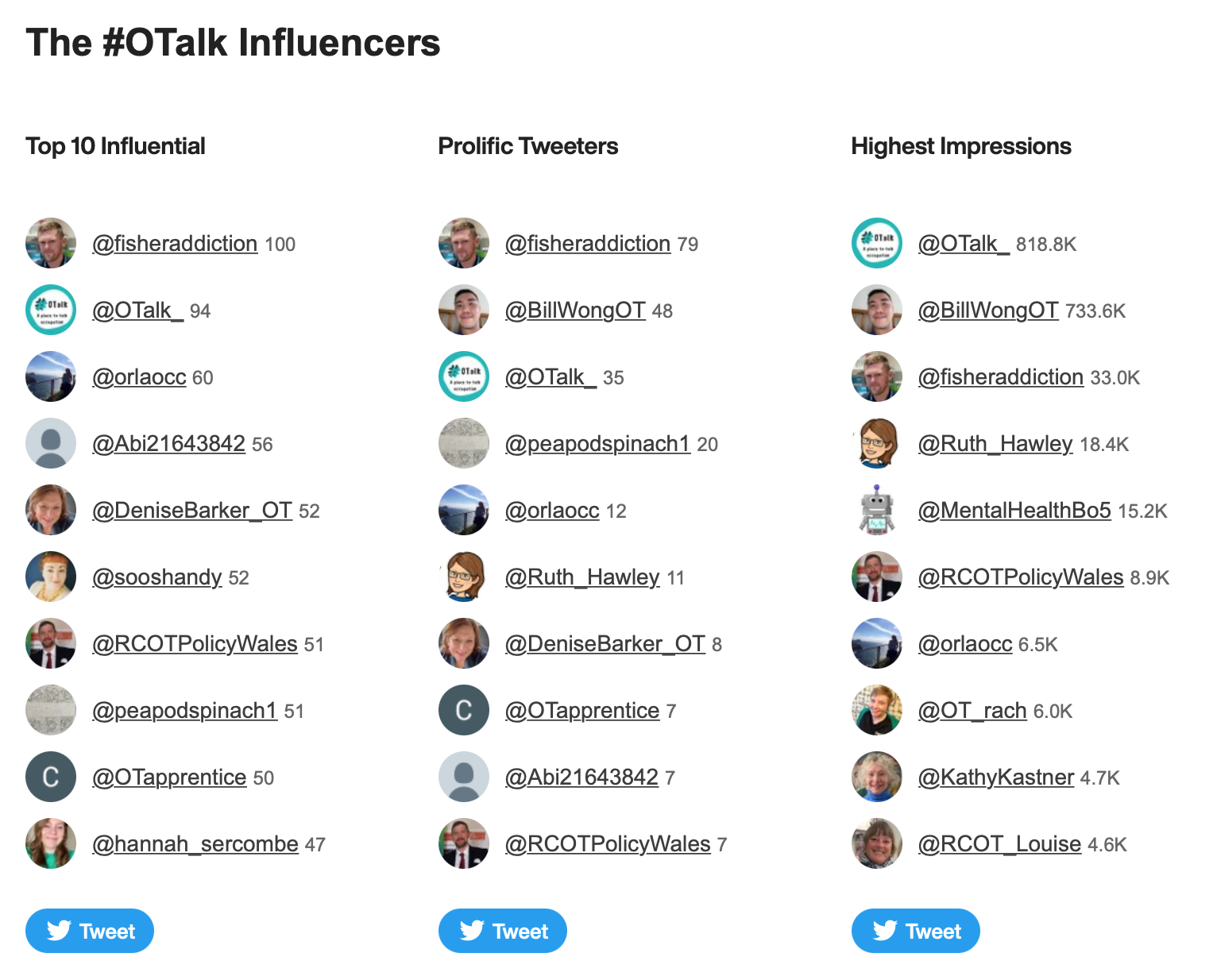
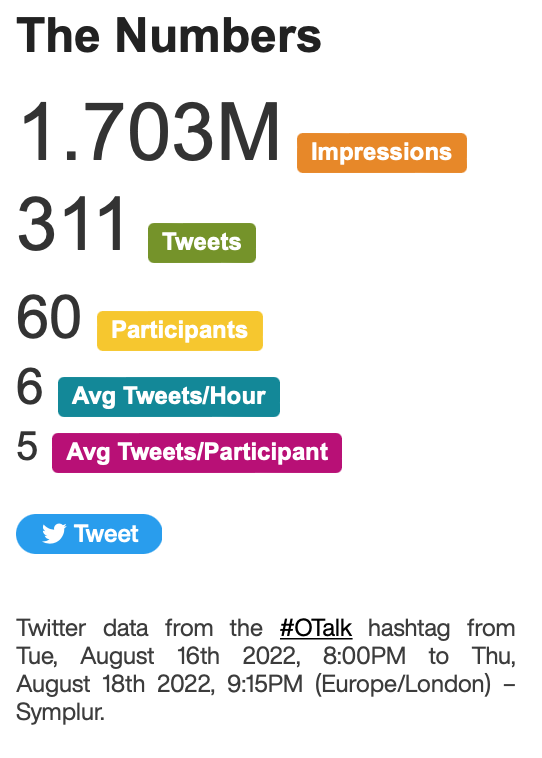
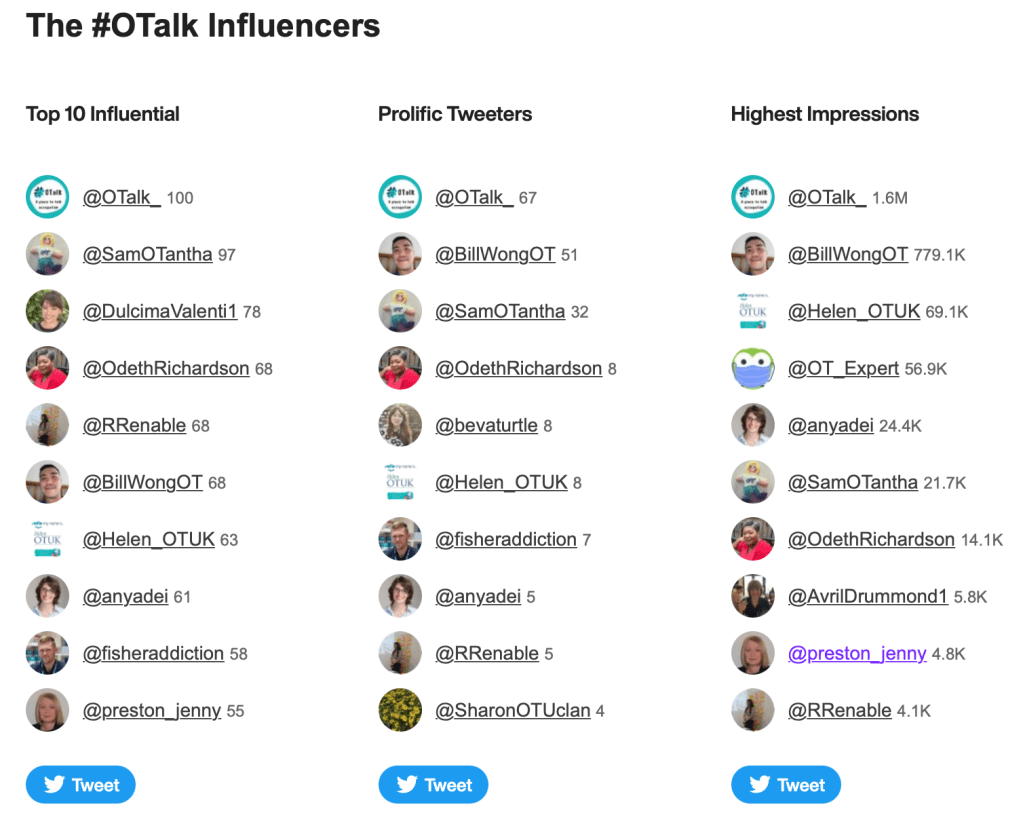
#OTalk Tuesday 16th August 2022 – The role of occupational therapy in substance misuse. Hosted by @fisheraddiction

This week #OTalk is hosted by Jon Fisher @fisheraddiction, here is what he has to say. If your new to OTalk find out here how to join in live on twitter every Tuesday 8pm Supported by Carolina.

The inclusion of occupational therapy intervention for people with addiction first appeared in the 1950’s in the ‘Clinical trial of occupational therapy in the treatment of alcohol addiction’ (Hossack, 1952). More recently, the concept of ‘addiction as occupation’ has been explored more thoroughly by Wasmuth, Crabtree & Scott (2014). They argued that by framing addiction through an occupational perspective, it can highlight barriers to recovery and treatment retention. This in turn could form the basis of occupation-focused intervention as a novel perspective in contemporary treatment services. 

By acknowledging addiction as an occupation and then focusing on this occupation’s gains and harms, occupational therapists may be in a position to gain trust of clients and help them to make adjustments to their occupational lives that are personally beneficial.’ (Wasmuth, Crabtree & Scott, 2014). 

The professional assumption is that engagement in meaningful occupation promotes health and wellbeing (Yerxa, 1998). However, Twinley (2021) has argued the need to ‘illuminate the dark side of occupation’, challenging this assumption that all engagement is healthy. Twinley argues that by fully exploring the individual meaning behind occupations that can also be detrimental to health, we can gain new insights and move closer to truly holistic care. 

In a scoping review, the most commonly described interventions included those that promote leisure; included skills training to facilitate activities of daily living; vocation based and those aimed at re-establishing community based sober routines (Ryan & Boland, 2021). It is by fostering a sense of competence through occupational participant that Patel, Scott and Bradshaw (2021) argue is the distinct value occupational therapy brings to promoting lasting recovery and reducing harm. 

With the UK’s ageing population (ONS, 2020) and an increasingly complex service landscape, evidence has shown it is the ageing ‘baby boomer’ generation who are at increasing risk from alcohol use. By drinking at the same level in their 40’s and beyond, this increases the risk of the harms associated with alcohol (Drink Wise, Age Well, 2021). Alcohol Related Brain Damage (ARBD) is increasingly recognised in services, with those in their 40’s and 50’s as the higher risk group (Royal College of Psychiatry, 2014). Changes in functional abilities arising from altered cognition fall well within the domain of occupational therapy with compensatory or rehabilitative interventions that promote occupational performance. 

Careful consideration is encouraged when addressing substance use in older adults (Royal College of Psychiatrists, 2018) in what ‘Our Invisible Addicts’ report describes as a ‘constellation of risks’. It argues for similar interpretation of risks and benefits of and individuals substance use on their physical and mental wellbeing; something that the concept of ‘addiction as occupation’ can support. 

There is a shortage of research concerning neurodiversity and substance use. Addictions UK (2020) found in their literature review that the studies available tended to focus on adult males who have had contact with the criminal justice system.  The National Autistic Society (2022) describes how someone with autism may use or become reliant on substances due to the stress arising from masking in order to ‘fit in’. They make a series of recommendations to ensure services are accessible. It is clear further understanding and changes are needed across the board.

In order to promote practice in this area and foster joint understanding, The Occupational Therapy and Substance Misuse Network has formed covering the UK and Ireland. The network has linked with over 30 occupational therapists working in substance use and related services. These include a diverse range of settings including specialist community services, inpatient detox and residential rehabilitation, homelessness, adult social care, community and liaison mental health services encompassing NHS, local authority and private sector services. 

QUESTIONS FOR OTALK:

  1. What brings you to OTalk about occupational therapy in substance use?
  2. What value does the occupational therapy role bring to substance use settings? 
  3. Outside of specialist substance use services, where do occupational therapists come into contact with service users experiencing substance and addiction related harms?
  4. What role can occupational therapists play in tackling stigma associated with substance use and addiction?
  5. How can occupational therapy ensure that substance use services/treatment is accessible to everyone?

REFERENCES:

Addictions UK (2020) Towards better and more joined up policy & practice for people with addictions & neurodiversity conditions Our journey so far… Available from: Towards better and more joined up policy & practice for people with addictions & neurodiversity conditions (addictionsnortheast.com)

Amorelli, C.R. (2016). Psychosocial Occupational Therapy Interventions for Substance-Use Disorders: A Narrative Review. Occupational Therapy in Mental Health, 32(2), pp.167–184

Drink Wise, Age Well (2021) 2015 – 2021: Evaluation of the Drink Wise, Age Well programme. Availabel online: evaluation-report-2015-2020.pdf (drinkwiseagewell.org.uk)

Hossack, J. R (1952) Clinical trial of occupational therapy in the treatment of alcohol addiction. American Journal of Occupational Therapy. 6(6): 265-6. 

National Autistic Society (2021) Addiction. Available online: Addiction (autism.org.uk)

Patel, R., Scott, S.L. and Bradshaw, M. (2021). Individuals With Substance-Related Disorders: Lived Experiences and Perceptions of Daily Life. The American Journal of Occupational Therapy, 75(Supplement_2), p.7512510233p1-7512510233p1. 

Rojo-Mota, G., Pedrero-Pérez, E.J. and Huertas-Hoyas, E. (2017). Systematic Review of Occupational Therapy in the Treatment of Addiction: Models, Practice, and Qualitative and Quantitative Research. American Journal of Occupational Therapy, [online] 71(5), p.7105100030p1. Available at: https://ajot.aota.org/article.aspx?articleid=2646442

Royal College of Psychiatrists (2018) Our Invisible Addict. Available from: Our Invisible Addicts (2nd edition, CR211 Mar 2018) (rcpsych.ac.uk)

Royal College of Psychiatrist (2014) Alcohol and brain damage in adults: With reference to high risk groups. Available online: college-report-cr185.pdf (rcpsych.ac.uk)

Twinley, R. (2021). Illuminating the dark side of occupation : international perspectives from occupational therapy and occupational science. Abingdon, Oxon ; New York, Ny: Routledge.

Yerxa, E.J. (1998). Health and the Human Spirit for Occupation. American Journal of Occupational Therapy, 52(6), pp.412–418. doi:10.5014/ajot.52.6.412.

POST CHAT

Host:   Jon Fisher @fisheraddiction

Support on OTalk Account: Carolina.

Evidence your CPD. If you joined in this chat you can download the below transcript as evidence for your CPD, but remember the HCPC are interested in what you have learnt.  So why not complete one of our reflection logs to evidence your learning?

HCPC Standards for CPD.

  • Maintain a continuous, up-to-date and accurate record of their CPD activities.
  • Demonstrate that their CPD activities are a mixture of learning activities relevant to current or future practice.
  • Seek to ensure that their CPD has contributed to the quality of their practice and service delivery.
  • Seek to ensure that their CPD benefits the service user.
  • Upon request, present a written profile (which must be their own work and supported by evidence) explaining how they have met the Standards for CPD.
OTalk

#OTalk Research Tuesday 2nd Aug 2022 – What next for the newly qualified OT? Transferring research skills from university into clinical practice.  

This week’s #OTalk research will be hosted by @SamOTantha with @preston_jenny on the #OTalk account.

Firstly, the #OTalk research team wish to congratulate all the newly graduated occupational therapists (NQOT) out there! I imagine the last thing on your mind right now is research,especially after many late nights and the stresses of completing dissertation projects or similar! However, with many NQOTs starting work and beginning their new adventure in clinical practice we want to explore how research and evidence-basedpractice (EBP) skills learnt and developed in university can begin to be applied.  Research engagement is a core component of clinical practice and a HCPC requirement. Therefore, it isnever too early to think about how we can implement these skills!

For this week’s chat we invite everyone to join and share their advice and tips for NQOT’s on how they can engage in research and EBP within their new posts and welcome them to the #OTalk research community.  We would also love to hear from some newly graduated occupational therapists on their plans for research engagement, and allow space for reflections using the following questions:

1- Do you think it’s important to consider research as a core component of the role of a NQOT? 

2- Do you think the skills that you have learnt at university regarding research and EBP will enable you to engage in research opportunities within clinical practice?

3- What areas of development would you benefit from and how could you develop these skills? 

4- What types of research or EBP opportunities could a NQOT engage in?  

5- How can we all support NQOT’s to engage to research and EBP?  

6- What tips and advice would you offer to a NQOT who is unsure of how to engage in research and EBP? 

Post Chat

Host: @SamOTantha

Support on OTalk Account: Jenny @Preston_jenny

Evidence your CPD. If you joined in this chat you can download the below transcript as evidence for your CPD, but remember the HCPC are interested in what you have learnt.  So why not complete one of our reflection logs to evidence your learning?

HCPC Standards for CPD.

  • Maintain a continuous, up-to-date and accurate record of their CPD activities.
  • Demonstrate that their CPD activities are a mixture of learning activities relevant to current or future practice.
  • Seek to ensure that their CPD has contributed to the quality of their practice and service delivery.
  • Seek to ensure that their CPD benefits the service user.
  • Upon request, present a written profile (which must be their own work and supported by evidence) explaining how they have met the Standards for CPD.