OTalk

RCOT2018 Blog 1. Opening Plenary: Chris Pointon – “#Hellomynameis…”

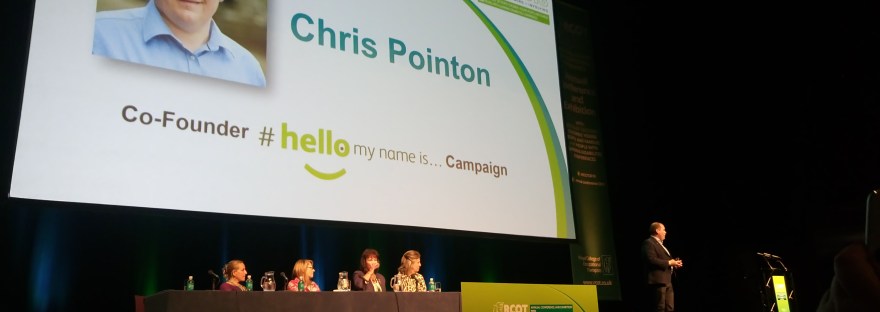
Chris Pointon is co-founder of the #hellomynameis… campaign.  He started the plenary session with a motto: “Through adversity comes legacy”. Speaking about his late wife, Kate, he continued to challenge the audience to ask themselves three questions:

  1. What is important to you in terms of your life plans? This may be where you see yourself in the next 5, 10 years.
  2. What date is important in your life? (marriage, birth of a child, the day you became an Occupational Therapist)
  3. What legacy do you want to leave in the world?

Chris described how he met Kate when she was studying medicine and how they knew they were going to spend the rest of their lives together, they were soul mates.
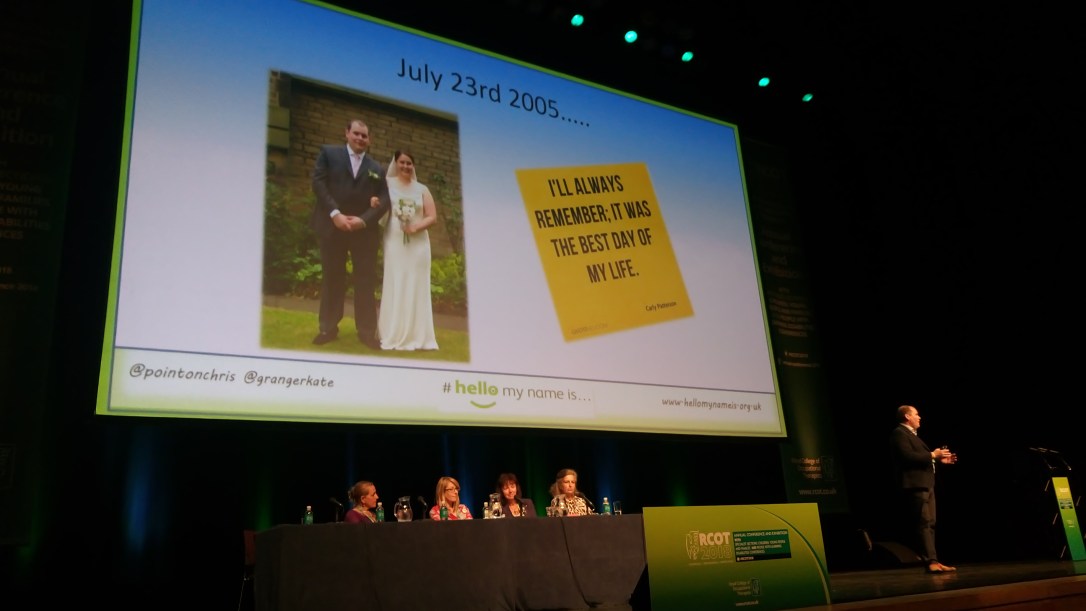
DSC_3306“July 23rd 2005 is the most important day of my life. This was the date that we got married. Our life plans were:

  1. Travelling
  2. To have a family
  3. Our careers”

However at just 29 years of age Kate was diagnosed with terminal cancer. Their saying was “Play the cards in life that we’ve been dealt”.  Chris was not from a healthcare background, but from being with Kate, her job as an older person’s Physician and her illness thrust him into the healthcare world. They felt that they just had to deal with and play their cards the best and most positively as they could.

Christ spoke at length about the stages of Kate’s illness and the healthcare professionals and treatment they received along the way, as well as Kate’s extensive bucket list and achievements. Kate wanted to be seen as a person who had made a difference, not the person who died young of cancer.  Chris played a video of Kate speaking about her core values:

  1. Communication – bad communication can do so much harm. Kate spoke about two very different experiences she had of healthcare workers giving her diagnoses, the first was a junior doctor who she had not met before. “He said “Hello my name is…” then looked away and didn’t ask if I wanted anyone with me. And then said “your cancer has spread” then just left. I never saw him again. I’m psychologically scarred by this”. We break news to people every day and we really need to think about how we do this. Her Oncologist on the other hand, when he have her the final diagnosis, held her hand, sat on edge of bed, sat with her in silence as it sank in. Although this was more devastating news, it wasn’t as traumatic.
  2. The little things – makes the difference between a good experience and a bad experience. “Holding my hand, sitting next to me, introduce themself. Listening to my fears and anxieties. He recognised how scared and anxious I was.   The Registrar, refused to sit down the next day, instead stood looming over and making me feel small and less in control.”
  3. Person centred care – this is banded around NHS care and management but what does it really mean?

As Kate’s journey continued she met many healthcare professionals who often failed to introduce themselves, even when taking her blood and carrying out observations.  Kate and Chris then met Brian who was a porter, he introduced himself and chatted about cricket to try and calm Kate before going down to theatre. After some reflecting that evening on the 30th Aug 2013 #hellomynameis… was born.

It is a common courtesy to introduce yourself by name, for it to be delivered with a smile and to be warm, welcoming and genuine.
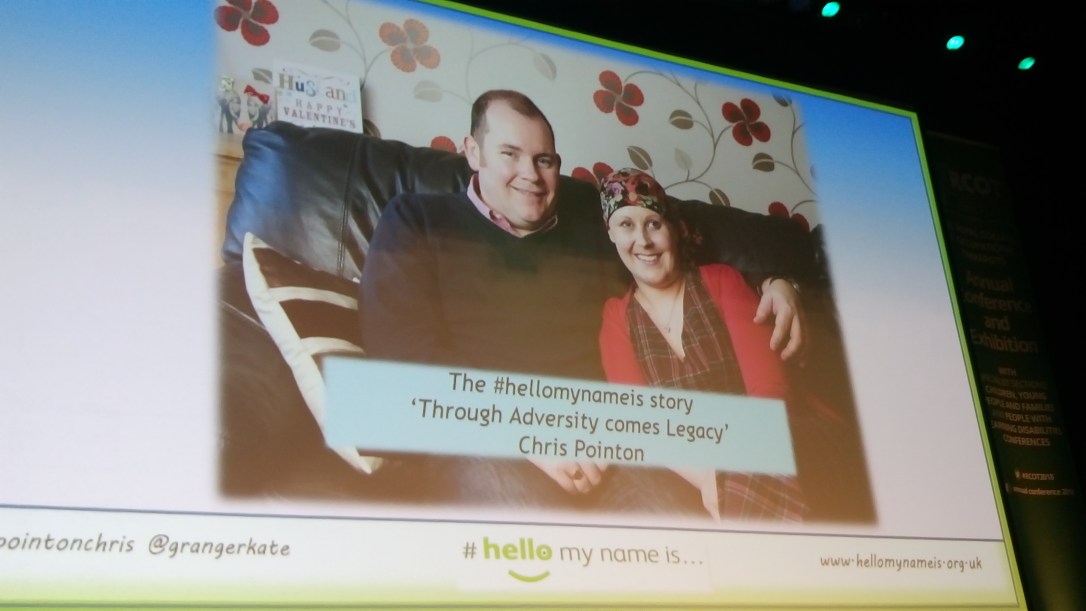
DSC_3305The #hellomynameis campaign took off all over the world.  This is where Kate started to talk about her own legacy.  “If I was to die today then I know I have made a difference and left a legacy”.  Introducing yourself by name takes little time to do, it costs little money and it makes a huge difference to patient care.

On the 23rd July 2016 it was Kate and Chris’ 11th wedding anniversary – Kate passed away on this afternoon. Chris spoke about how she was in control to the end, of her destiny and passed away almost to the minute that they said their vows.  Pain free and at peace.

Chris is currently on a global tour with the campaign and carrying on Kate’s legacy.

To find out more about the #Hellomynameis… campaign visit:

www.hellomynameis.org.uk

Twitter: @pointonchris, @grangerkate

Blog post written by Catherine Gray @CupOTServices
#BlogSquad2018, OTalk

Introducing the RCOT 2018 Blog Squad

As everyone is starting to prepare for RCOT 2018 this years blog squad is gearing up to bring you insights into their conference experience. We had wonderful feedback about the blogs last year and so have decided to do it again. So that you know who we are here is a little bit about us.

Given the size of conference, and the fact that people are doing this during their own conference time, there is a limit to how much we can capture. However we’ve tried to cover all of the key events and to pick some of the sessions that have caught our individual attention.

The blogs will be posted during conference so make sure to keep an eye out for them next week and if you’re at conference and you see one of us – come and say hello.

IMG_0702
Marie Baistow

Marie Baistow

Hello I am mum to four lively boys and a crazy dog. I hold two Occupational Therapy posts within Pennine Care NHS Trust, one within an acute Older Adults in-patient ward and the other a Care Home Liaison Service. Since graduating 18 years ago I have practised predominantly within mental health. I love learning new information. I am passionate about ‘human centered care’, social inclusion, advocacy, compassion, the value and awesomeness of Occupational Therapy and a focus on ‘seeking to understand’. I am really excited to attend the conference and soak up all the positive vibes. To stay buoyant in very challenging work environments ( ie the medical model/risk aversion) I have been blessed and I am grateful to have in my life grounding/bare foot walking, Nia Dance , Somatic Yoga, Ariel Yoga, Pilates, Meditation, Glasswalking, Firewalking and Gong Baths ( sound / vibration healing). I also love long walks with my dog and cycling. Say hi to me on twitter @Mrsbaistow


image001
Elspeth Clark

Elspeth Clark

Hello, I am an occupational therapist on a specialist NHS community team for adults with learning disabilities and complex distressed behaviour. I am passionate about learning disability occupational therapy practice and integrating research into clinical practice. In 2017 I was awarded a place on the HEE/NIHR funded MSc in Clinical Research at Plymouth University; my research focus is outcome measurement in learning disability occupational therapy. I am co-presenting a session this year and excited to be attending the conference, and part of the blog squad!  Find me on Twitter at@Els_OT

Faye
Faye Dunford

Faye Dunford 

I worked across a range of adult mental health services before my passion for research led me to my current role as a research practitioner within mental health research delivery. I recently completed an HEE/NIHR Internship and I plan to progress as a clinical academic. My research aims to develop the role of occupational therapists working within Crisis Resolution Teams. I am co-presenting at this year’s conference and am excited to use blogging as a way to celebrate the insights, ambitions and attainments of occupational therapists! Find me on Twitter @FayeDunford

img_1801.jpg
Lynne Goodacre

Lynne Goodacre

I worked in the NHS and voluntary sector supporting people with rheumatic conditions and managing an Independent Living Centre before moving into academia. I have supervised postgraduate students at Masters and PhD levels and undertaken my own research. I work now in independent practice as a professional personal coach and specialise in providing 1:1 and group coaching to AHPs and early career researchers.


Catherine Gray

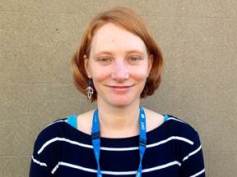
Catherine Gray low res - Cropped
Catherine Gray

Hello, I’m Catherine. I have spent the majority of my professional life as an Occupational Therapist working in young people’s mental health and early intervention psychosis. I currently work as a Research Practitioner in Norfolk and Suffolk NHS Foundation Trust and I am the founder and Chief Executive Officer of Cup-O-T: Wellness and Therapy Services. Cup-O-T is a social enterprise which delivers mental wellness support to those living in rural Norfolk and Suffolk. Outside of work I enjoy foraging, anything to do with Harry Potter, origami and spending time with my Husband, Joe, and cat, Frodo. Website: www.cup-o-t.co.uk Twitter: @CupOTservices


IMG_3979
Orla Hughes

Orla Hughes

Hello, I am a MSc occupational therapy student at Teesside University. I aspire to work as an occupational therapist in the mental health sector when I graduate in early 2019. My hobbies include playing ukulele, singing in a choir, travelling, hiking, and photography. I am presenting at conference for the first time (Session 12) and hope to share what I’ve learnt from this experience in a blog squad post. Find me on twitter and say hi: @orlatheOT


image002
Rachel Imms

Rachel Imms

Hello, I have been an Occupational Therapist for almost twenty years. Most of my clinical practice was within the NHS in an acute medical setting, and I have also worked in private and voluntary sectors. I did my post graduate MSc at University of Central Lancashire (UCLAN) and enjoyed it so much that last year I left practice and secured a job at UCLAN. I am now part of a team who are developing a brand-new pre-registration MSc OT course which will start in September. This is my first COT conference and I am very much looking forward to it.


20170507_212034-1
Catherine McNulty

Catherine McNulty,

I am an Occupational Therapist, passionate about the ‘doing stuff of life’, many years working in mental health & teaching next generation of occupational therapists  in my role as an Associate Lecturer with Sheffield Hallam University & loads of voluntary feral occupational therapy.  Will be hosting Occupation Station Workshop : Learning in a Human Library: don’t judge a book by its cover! Wed 13 June Session number: 93.1 14.00-15:35. Come and join us!! … twitter @cathymc9781


FB_IMG_1528133404307
Amie Mowlam-Tette

Amie Mowlam-Tette

Hello, I am an Occupational Therapy graduate from Essex. I currently work as the RCOT Education Liaison Officer for pre-registration students travelling to universities across the UK to talk to students about RCOT membership and support them through their studies. I can now say I’ve left the South East and seen most of the UK, my geography on the other hand, hasn’t improved. Professionally, I am interested in the therapeutic use of writing and creative arts, mental health, Dementia and Autism. Outside of work I spend a lot of my time with my adorable and energetic sprollie (spaniel cross border collie), fire juggling, dabbling with archery, knitting, sewing, attempting to cross stitch, folk music and drinking way too much coffee. If you want to say hi or talk more, find me on twitter: @Amie_OT


image1
Cathy Roberts

Cathy Roberts

Hi, I am a soon-to-be qualified Occupational Therapist having just finished my BSc (Hons) Occupational Therapy at Coventry University. I have recently accepted my first rotational Band 5 role in acute mental health, starting on a dementia unit. Professional interests include: Green Care interventions for mental health recovery, mindfulness and evidence-based practice. Personal interests are: anything to do with my tortoiseshell cat (Summer), historical fiction novels and the great outdoors. This is my first time at conference (and first trip to Ireland!) 🙂


#COT2017

Blog Squad #COT2017 S1- Opening Plenary

There was an atmosphere of excitement as we all entered Hall 1at Birmingham’s ICC for the first session of this year’s RCOT conference #COT2017 and we were not to be disappointed. The first Keynote speaker was Paul McGee who inspired us, challenged us and made us laugh along the way. Paul is the Managing Director of PMA International which aims ‘to help people achieve better results in life and have fun in the process’. He is also known as the SUMO Guy. SUMO stands for ‘Shut up and move on’ and you can follow Paul on twitter @TheSumoGuy and his website is www.thesumoguy.com.

Paul had very engaging slides and used cartoons, some of which can be viewed in this pdf from his website. ‘Faced with a challenge? 7 questions to help you.’ He got the audience engaged from the get go by us making stand and repeat a phase to a partner – we very trustingly did this but then wandered what on earth we had just said as it was in a foreign language. This turned out to be Norwegian for ‘I love you sugar babe’! Paul then told us that the word inspire means ‘to breathe life into’ and that is what he understood occupational therapists aim to do. This set the scene for the conference as ‘inspire’, ‘inspiring’ and ‘inspirational’ all became words I heard and saw tweeted a lot of the course of the conference.

Not satisfied in making us speak Norwegian, Paul then got us to repeat another phrase after him – this time we were asked to repeat to each other that we were utterly and completely Mad! Fortunately, MAD turned out to stand for ‘Making a Difference’. Next, Paul asked us to focus on our attitudes and thoughts and to ‘Mind our mindset.’ He suggested that we need to evaluate the challenges we are dealing with and put them in perspective. We were asked to try evaluating a current challenge on a scale of 1 to 10, where 10 = death.

SUMO evaluate out of 10

Paul recommended that we try to push a few more doors because you only need one to open. This reminded me of Professor Peter Millard, my supervisor when I held a Senior I research post in the Department of Geriatric medicine at St Georges hospital.  Prof Millard taught me this same lesson in 1990 about applying for research funds. The worse you may get back is a ‘no’ but this is worth the risk because of the greater potential benefits that can occur if a door does open. It is the ‘nothing ventured, nothing gained’ and ‘you have to be in it to win it mentality’

Paul also warned us against CNN = the barrage constant negative news we are now subjected to and encouraged us to remember the wonder and good in our world. So as we move forward we need to stop being on autopilot, take time to think, reflect and move on with more knowledge. Paul then put up my favourite moto on the screen ‘Carpe Diem’ (for anyone who hasn’t heard of this before it means ‘seize the day’). He reminded us that it doesn’t matter if we fall, but it’s how long you stay down that matters. So the SUMO Guy got us laughing, but also to stop, reflect and put our challenges into perspective. To hold on to our vision as occupational therapists and remember that we do make a difference and being MAD is good!

Our second Plenary Speaker was Dr Winnie Dunn from the University of Kansas, USA @winniedunn. Winnie is an internationally recognized research and expert in the field of sensory processing in everyday life and author of the Sensory profile measures.

As my own PhD related to test development and psychometrics and I am familiar with the sensory profile I was excited to hear her speak. Winnie emphasized that sensory processing is about everyone, not just those considered to be vulnerable or with a diagnosis associated with sensory processing difficulties. Children may process sensory information differently regardless of whether they are neurotypical. She summarised the evidence base from a comprehensive literature review and from data collected using the sensory Profile. I particularly liked how she made one of her points about not labelling clients based on their scores and distribution on the bell curve through using herself as an example.

Winnie Dunn bell curve

During the Opening plenary we also were asked to express our thanks for this year’s conference organising team: Sarah Bodell, Dee Christie, Ken Levins, Jennifer Read, Alicia Ridout and Clare Taylor.

We ended the session with a minutes silence to remember all those who have been affected by the recent Grenfell Tower fire disaster in North Kensington, London. I personally appreciated this quiet time to pray for all those involved and was glad COT included us in the Nation’s minute of silence.

Dr Alison Laver-Fawcett @alisonlaverfaw

#COT2017

#COT2017 S29 – The Elizabeth Casson Memorial Lecture: Life as an occupational being

Delivering the 2017 Casson Memorial Lecture – Before, During & After

Diane has posted a blog about her preparation for delivering this year’s Casson Memorial lecture – the ‘Before Casson Blog’. Alison has written two blogs on her impressions of the Casson both during and after the lecture.

The Before: The title of my Casson Memorial Lecture is “Life as an occupational being”, I approached this blog on the experience of delivering the Casson Memorial Lecture with this title in mind. When I found out I had been nominated and chosen to deliver the Casson I was delighted and terrified!

Over the year of preparation, I read, wrote, rewrote, read, and wrote again – the focus for me became the point of this being a lecture that is published and therefore written as a speech and then published in the British Journal of Occupational Therapy  – I spoke to a number of past Casson lecturers and the advice was write for the day so that’s what I did.

Trying to decide what I wanted to say was the hardest decision as there were so many aspects of my life as an occupational being and our amazing occupational therapy profession I wanted to talk about – but I kept coming back to the importance of evidence and our need to investigate and publish what we do.

Once I had decided what I wanted to say then came the writing – the Casson is delivered as a lecture in its fullest sense. I needed to write a speech that could be delivered in 45 minutes and no more – how many words should it be? – advice I was given is somewhere around 5000 words as “the average person speaks at somewhere between 125 and 150 words per minute. It’s always better to speak more slowly than quickly”.  Others told me to write too much and then cut it down – I’ve delivered many lectures, seminars, workshops over the years in practice and in education I have always tended to do the slides and then talk to the slides – I’d never before being mindful of every word – a new experience – a new occupation – one I am privileged to have experienced.

Diane Cox @dianecox61

During the Casson: 19th June 2017

I had been waiting in anticipation for today to arrive for a long while the day my brilliant colleague Professor Diane Cox delivers the Elizabeth Casson Memorial lecture. I had been given some hints – but what would she say? And how would she say it? It is hard to do a 45 minute lecture that has taken hours of consideration to write justice is a short blog – so here are a few of my highlights:

Diane reminded us of the important legacy that Dr Elizabeth Casson has left us. In her explorations of RCOT’s archive she had found an early publication of Dr Casson’s from 1941 began with the statement ‘Rehabilitation needs serious attention at present’ – and Diane challenged us to address this, as it is still so true today.

A significant portion of her lecture focused on the meaning of occupation for human beings and for occupational therapists and occupational therapy. Occupational and social interactions are essential to a person’s life. Diane shared a couple of quotes from other authors that really resonated with me: “Occupation is as old as humanity” (Reed et al, 2012) and from Brock (1934): “Occupation is not a secondary matter. It is a primary need of an individual’s life”. So we must keep occupation central in our practice and research.

For me, one of Diane’s most reassuring facts is that occupational therapy is the lowest risk job to be taken over by robots. However, we shouldn’t rest on our laurels because Diane told us that a challenge OTs face is that, although we are the profession at least at risk of being taken over by robots because of the highly complex nature of OT interventions, on the surface occupational therapy practice can look so simple. Diane shared one of her own photographs of a swan – it looks serene but all the power is hidden under the surface. So we have to learn to be able to articulate and evidence the complexity of our practice, particularly the parts of occupational therapy that are not easily discerned by others.


Casson - low risk of robots

Her take home messages were very clear and the last one was given to us first in the lecture, as well as at the end: ‘Publish, publish, publish’! It is our responsibility as occupational therapists to provide the evidence base for the impact occupational therapy can make to enable people to be the occupational beings they need, want and are expected to be. Diane challenged every presenter at the COT to write their presentations up and submit for publication and to make a commitment to publish at least once a year. We must tell policy makers what OTs do and provide the evidence of our impact to influence policy direction. We also need to be able to summarise our practice and our research succinctly and know how to encapsulate what we do and why we do it. Like speed dating we need to get good at ‘speed describing’! Diane talked about the three minute thesis – can you do it? Can you define what you do, describe what you do – and could it be replicated? Your occupational therapy work or research summarised in 3 minutes? One way to try to summarise what you do is to organise it using PICO. P = patient, person, problem; I = the intervention; C = comparison intervention when relevant; and O is the outcome of interest. If you aren’t familiar with PICO you can find information here: 

Diane finished by telling us that publishing should be part of our shared occupation and is part of our OT occupational being.

After the Casson: 21st June 2017

If you missed Diane’s Casson lecture or want to reflect on her messages further I’ve been told by BJOT’s editor that the Casson is usually published in the September issue of the British Journal of Occupational Therapy – it will definitely be on my ‘to read’ list. Inspiring was one of the words most frequently used in the comments made directly to Diane after the lecture and by people discussing the lecture as they left the auditorium.  I’ve been following the resulting tweet chatter with interest to get a sense of the impression that this year’s Casson lecture has made on colleagues at conference. In the spirit of evidence based practice I set the question: ‘How have OTs reacted to the 2017 Casson Lecture’? I searched for posts citing @dianecox61 and / or the #COT2017 hash tag for evidence. After appraising the evidence here are my key findings. The message that we all should be publishing was definitely picked up on by the OT Twitterazzi. Several people posted Diane’s final slide on twitter and it is still being retweeted and commented on by others two days later. For example:

@SBtweetsOT tweeted: ‘After challenge yesterday from @dianecox61 to Publish Publish Publish I attended a workshop with BJOT editor-in-chief on just that!’

Whilst @tcookot commented ‘@theRCOT 3 things on my mind the morning after #COT2017: oxygen masks, mental benches and…


publish publish publish - Casson


Miranda Thew @thewmiranda tweeted this afternoon: ‘@theRCOT Let’s see some of those inspirational ideas and research projects published!! As @dianecox61 urged!!’ But Channine Clark @channineclark appears to be the first person to report that Diane’s  challenge has been actioned,  as she posted at 4pm this afternoon:‘Following advice of @dianecox61 and submitted to BJOT this morning a paper highlighting issues of occupational deprivation on hospital wards.’

So whether you are a clinician, manager, educator or researcher – as Jo Webb tweeted today in response to Clare Taylor’s @ClareTaylorBU tweet of ‘one publication a year’

@‘Top of the To do list everyone!’

Alison Laver-Fawcett @alisonlaverfaw

#COT2017

#COT2017 My First RCOT Conference Diary:

Diary 1Sunday 18th June 2017 – The Journey

It all began with my journey to Birmingham. Well actually, it started way before that. I expressed my interest in going to the conference last year and I was lucky enough for the department I work in to fund it. From then the reality hit that, as exciting as it was going to be, it was also nerve wracking. I wouldn’t know a single person going. This leads me to provide my first tip to new conference goers: network beforehand! Make connections through twitter, join in tweet chats and get involved. That is how I came to be involved in writing these blogs. So I arrived at Birmingham after a 4 hour bus journey and made my way to the ICC to register early. I met with a welcoming group of #OTalk Occupational Therapists, organised through twitter, and went out for dinner. This helped ease the fear that I would spend the entire two days walking around on my own! A great start to the days to come…

Monday 19th June – Conference Day 1

I am a super organised person so I’d mapped the whole two days out in a pocket sized timetable for myself. The Book of Abstracts created by the conference team as invaluable.  There are a huge range of sessions covering a variety of areas you may not have even considered!  I balanced things that would directly benefit me professionally in my current workplace and things that just sounded fascinating.

Diary 4The opening plenary session was uplifting and inspiring and set the mood for the rest of the conference. Don’t forget to have a look at the #OTalk blog posts that cover a HUGE variety of sessions.

Competition was fierce to get into sessions and it paid to be organised by knowing what I wanted to attend, the timings and where to go – that is certainly my second tip for attending! As a third tip – have a back-up plan in case your first choice session is full when you get there.

My day consisted of:

  • S1: Opening Plenary with Paul McGee (SUMO) and Dr Winnie Dunn (University of Kansas)
  • S12: Facilitated Posters – A set of 4 posters that were presented and then questioned in quick succession.
  • S22: Critical Discourse – Sleep, sleep problems and sleep treatment: future directions for Occupational Therapists (Sophie Faulkner)
  • S29: The Elizabeth Casson Memorial Lecture – Life as an occupational being by Professor Diane Cox.
  • S30A: Occupation Station – a practical session where we made a stop motion animation of a blooming flower.

I also took time to view the posters, the mini A4 versions to take away is a brilliant idea! The day passed surprisingly quickly considering how packed it was. For me it finished with the welcome drinks, for others it went on into the night with the Conference Party – something I’ll definitely go to in the future.

Diary 5Tuesday 20th June – Conference Day 2

Conference started at 8.30am with another jam-packed day of sessions. I gave myself a few breaks today as I was flagging from the sheer amount of information I had taken!  This time wasn’t wasted, I networked with other delegates, visited the stands, signed up to the Mental Health Specialist Section.  I also collected lots of goodies to take back to the Occupational Therapists at work – pens, badges and post-it notes galore!

Today I attended the following session:

  • S54: Brag and Steal – 4 innovative practice examples that Occupational Therapists are proud of and want to share.
  • S65: RCOT Insights – Mental Health – the value of Occupational Therapy (Genevieve Smyth)
  • S70: Occupational Science – Occupational balance: who decides? (Michael Feighton). This was a truly inspirational and brave professional and personal story session.
  • S84: Occupational Science Research – The presentation of two studies, one looking at skilled participation in embroidery and the other at the meaning of creative writing as an occupation.
  • S92: Service Development Research – A pre-post evaluation of an Occupational Therapist led group lifestyle and resilience course for well employees in a public sector workplace (Miranda Thew)
  • S98: Closing Plenary: Dr Jennifer Creek (Occupational Therapy Researcher and Author) and Tina Coldham (Mental Health Campaigner)

The closing plenary was just as uplifting at the opening one and I left with mountains of information to share with the many amazing Occupational Therapists I work alongside.  Here’s hoping I can attend next years conference in Belfast!

Diary 3Blog by Catherine Gray (@CGray_OT)