Hosts: Keir Harding and Dr Jenny Preston
In our recent OTalk Research team catch up, we got chatting about the recent scandal involving the publication of a paper by a PhD researcher, with somewhat questionable ethical standards.
As you can imagine, our collective thinking was ‘how on earth did that get past peer review?’
Those of us who have trodden the often-arduous path of publication in a peer reviewed journal know all too well how challenging this process can be. No doubt many have likely avoided the process at all costs, aware of the blackened reputation of the peer review culture.
The pitfalls are many! A reviewer with a personal bias, contradictory reviews from reviewer 1 and that renowned tricky reviewer 2 and feeling like the reviewer just didn’t get it! Were they the right person to review your topic and/or methodology? Did they give your paper the time and attention your hard crafted work truly deserved?
Though it’s not always plain sailing, it’s not always bad news either. Peer reviewers also offer supportive, constructive feedback that can often lead to an improved submission.
Data suggests that only 1.2% of manuscripts submitted to journals are accepted for publication1. So, when you have something important to share, findings from your work that you want to disseminate and information to communicate to the wider world, only to be derailed by the peer review process, how do we get the most out of peer review, how can we prepare ourselves for it and how we can view this as a constructive experience?
Our colleague Keir Harding has spoken candidly on social media about his repeated failure to get his MSc dissertation published in a peer reviewed journal. He has had success though, with three publications in the Lancet and others in CAMH, MHRJ and most importantly BJOT. Opinion pieces he can get published, research not so much.
We asked Keir to join us for this month’s OTalk research to discuss the peer review culture
Suggestions for Questions:
1. What are your experiences or your understanding of the peer review process for publication?
2. How has the peer review process affected your confidence and ability to write for publication? (for better or worse)
3. What have you learnt from the review process that could or has helped you to be a peer reviewer?
4. What changes to the peer review process do you think would help improve the dissemination of occupational therapy research?
5. What are your top tips for those who have yet to go through the peer review process?
6. Do you have anything else to share about the peer review process or stories to tell us about reviewer 2?
Reference
1. https://www.editage.com/insights/top-peer-review-challenges-for-authors-and-how-you-can-solve-them
POST CHAT
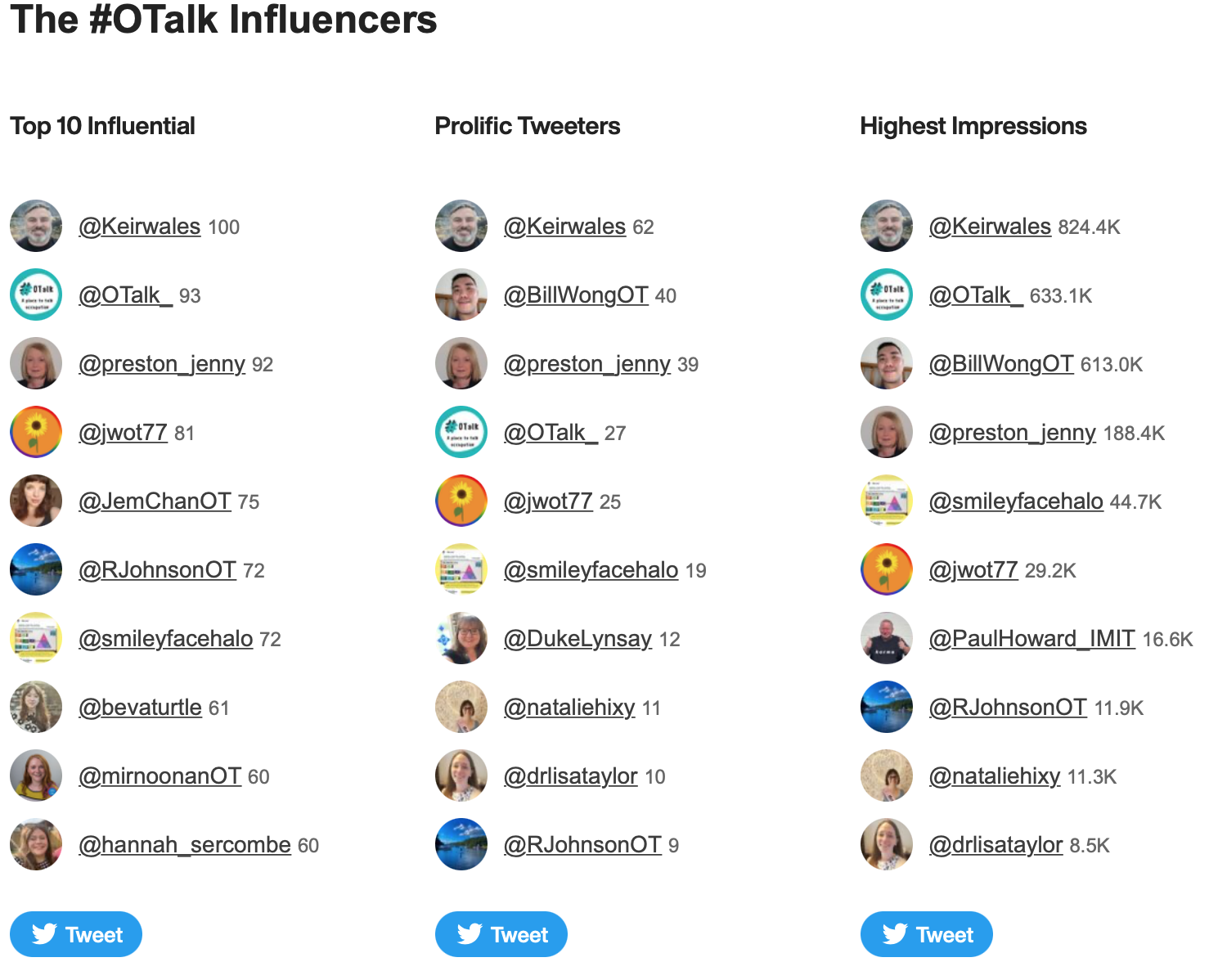
Host: Keir Harding @Keirwales and Dr Jenny Preston @preston_jenny
Support on OTalk Account: Nikki Daniels @NikkiDanielsOT
Evidence your CPD. If you joined in this chat you can download the below transcript as evidence for your CPD, but remember the HCPC are interested in what you have learnt. So why not complete one of our reflection logs to evidence your learning?
HCPC Standards for CPD.
- Maintain a continuous, up-to-date and accurate record of their CPD activities.
- Demonstrate that their CPD activities are a mixture of learning activities relevant to current or future practice.
- Seek to ensure that their CPD has contributed to the quality of their practice and service delivery.
- Seek to ensure that their CPD benefits the service user.
- Upon request, present a written profile (which must be their own work and supported by evidence) explaining how they have met the Standards for CPD.


 OTalk
OTalk 